When to go
Best time to walk the Tour du Mont Blanc
Late June to mid-September is the realistic window, with the second half of September usually the quietest good walking.
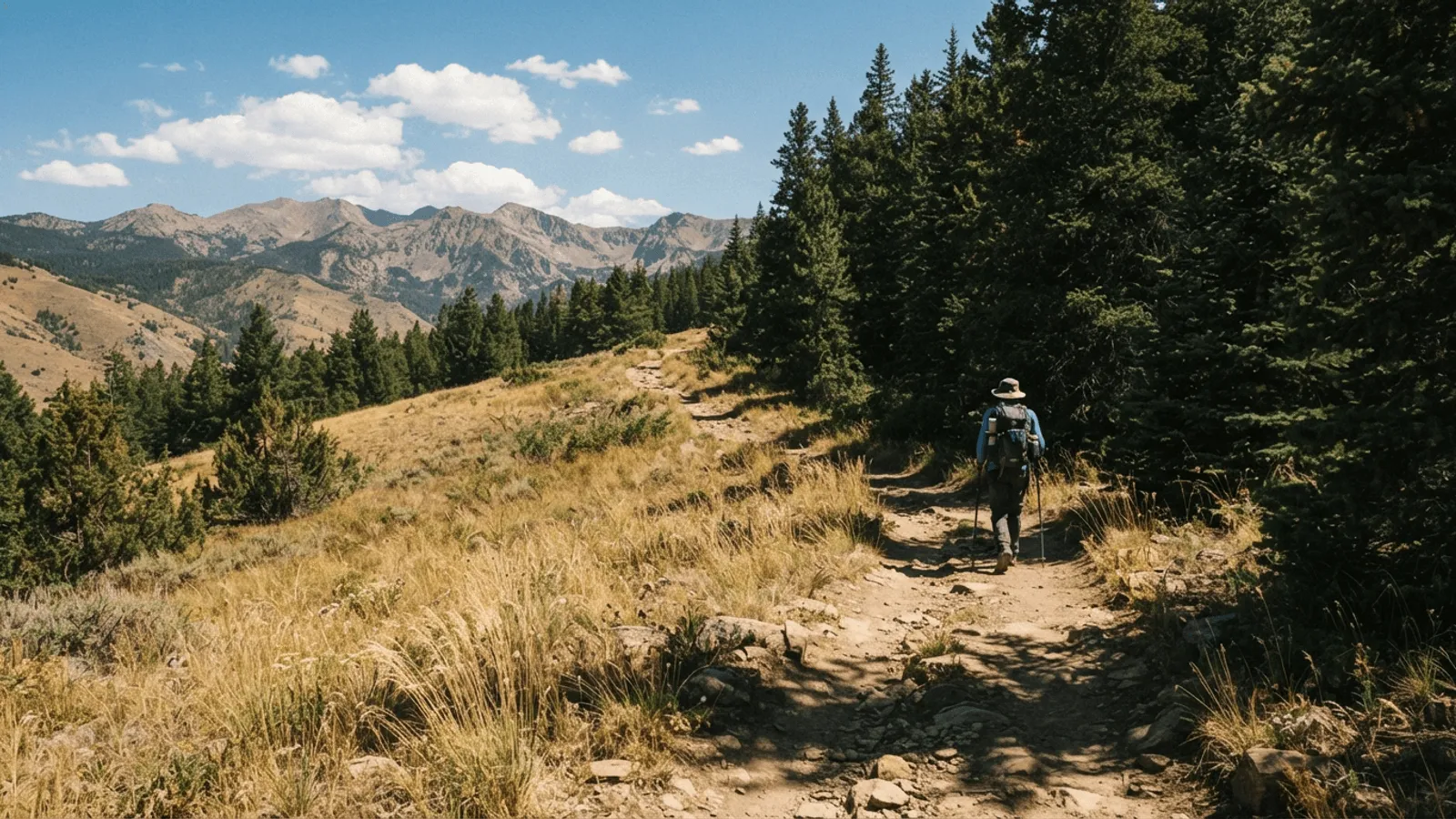
The Tour du Mont Blanc runs on two clocks: snow on the cols and the refuge calendar. The route crosses several passes above 2,400 m, with the Fenêtre d’Arpette and the Col des Fours among the last to clear, and old snow can linger on north-facing approaches well into early July after a heavy winter. Staffed refuges usually open in a band between mid and late June and close between mid and late September, but every hut sets its own dates and they shift year to year, so confirm directly with the operator before fixing an itinerary.
July and August are the season proper, and they are busy in a specific way. The path itself rarely feels crowded, because walkers spread out by pace, but refuge beds do not: the popular huts around Bonhomme, Elisabetta and Bonatti are commonly fully reserved months in advance, and the Ultra-Trail du Mont-Blanc in late August briefly saturates accommodation across the whole loop. Courmayeur and Chamonix absorb the overflow. If you want a specific hut on a specific night in high summer, you are booking in winter.
Late June and September are the shoulder, and each has a clear trade-off. Late June gives long daylight, full rivers and quiet huts, but some refuges are not yet staffed and the higher variants may still hold snow that makes an ice axe or a detour sensible. September reverses it: the ground is dry, the air is clear, the crowds have gone and the light is at its best, but daylight shortens noticeably, huts close in sequence through the month, and the first serious snowfall of autumn can arrive at any point.
Mountain weather here is convective in summer. Mornings are often clear and thunderstorms build over the massif in the afternoon, which is the main argument for early starts rather than the heat. Valley temperatures in July can be warm, while a col at 2,500 m in wind and cloud can feel close to freezing on the same day, so layering matters more than a season-specific kit list. Snow above 2,000 m is possible in any month. Treat all of this as the typical pattern, not a forecast.
City days
On arrival in Geneva
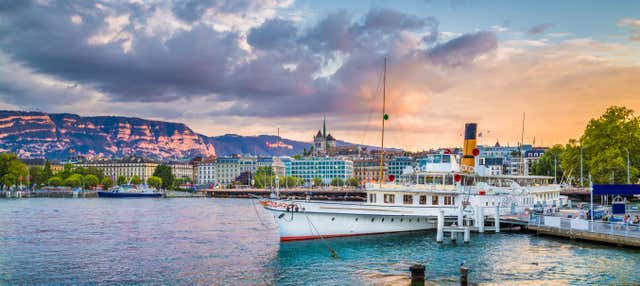
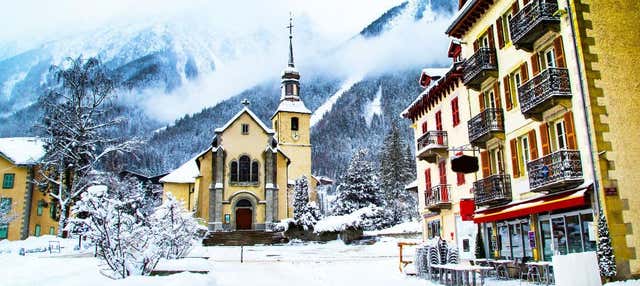
Geneva is the practical airport for Chamonix. With a few hours to spare before the transfer, or an afternoon before the flight home, there is a short cruise on the lake from the city quays. For anyone in your group who is not walking, there is also a coach day trip from Geneva to Chamonix, with commentary in English. Neither is part of the trail.
Affiliate links: if you book through them we may earn a commission, at no extra cost to you. It never changes our stage, distance or luggage information. (Civitatis) How the project is funded
Before or after the walk
Tours and visits in Chamonix · Courmayeur
A few well-rated options near Tour du Mont Blanc, for the rest days either side of the trail. Prices are the provider’s current starting price.
 Tandem paragliding over Chamonix, take-off from Plan-Prazfrom €179See details ↗
 Skyway Monte Bianco from Courmayeur: up to Punta Helbronner (3,466 m)from €147See details ↗
 Rafting on the Arve at the foot of Mont Blanc, Chamonixfrom €77See details ↗
Affiliate links: if you book through them we may earn a commission, at no extra cost to you. It never changes our stage, distance or luggage information. (Viator) How the project is funded
Month by month
Typical conditions through the year. Weather varies from season to season, so treat this as a planning guide and check the forecast close to your dates.
- January Off season
Full winter. The high cols are under snow and the walking route does not exist as such.
- February Off season
Deep snowpack across the passes. Only ski touring and snowshoe routes operate in the valleys.
- March Off season
Avalanche risk remains significant on the traverses. Refuges are shut or serving winter sports only.
- April Off season
Melt begins low down, but the cols stay snowbound and the circuit is not walkable end to end.
- May Off season
Valley floors clear and flower, yet high passes still hold snow and staffed refuges remain closed.
- June Shoulder
Huts begin opening mid-month. Long daylight and few walkers, but residual snow on the highest cols.
- July Prime
Reliable conditions and everything open, with afternoon thunderstorms common and beds heavily booked.
- August Prime
Warmest and busiest. Refuges full, and the late-August trail race saturates beds around the loop.
- September Prime
Clear air, dry ground and thinning crowds, though huts start closing and daylight shortens fast.
- October Shoulder
Most refuges are closed and snow can return to the cols. Day sections from the valleys still work.
- November Off season
Winter arrives on the passes. No hut support, short days and unreliable footing above the treeline.
- December Off season
The circuit is under snow. Chamonix and Courmayeur switch entirely to their winter season.
The sweet spot
The first three weeks of September. Snow has long gone from the cols, the air is clearer than in August, refuges are still mostly staffed, and the trail is markedly quieter than in high summer.
Outside the season
From roughly mid-October to mid-June the high cols carry snow and the staffed refuges are closed, which removes both the accommodation and the safety margin the route depends on. Some huts leave an unstaffed winter room, but these are emergency shelter, not an itinerary. Avalanche risk on the traverses is real from late autumn onwards. Walking the full loop off-season is a mountaineering undertaking rather than a trek.
Frequently asked
When do the refuges on the Tour du Mont Blanc open?
Most staffed refuges open somewhere between mid and late June and close between mid and late September, with the higher and more remote huts opening latest and closing earliest. Dates are set individually and move each year depending on snow and staffing. Because the whole itinerary depends on them, confirm your specific nights with each refuge or its booking system rather than assuming a standard window.
Can I walk the TMB in June?
Late June often works and is one of the quietest good windows, but it depends on the winter. After a heavy season the Fenêtre d’Arpette, the Col des Fours and other high variants can still hold snow that makes the standard route the safer choice. Some refuges will not yet be staffed either, so check opening dates before you commit to a June start.
Is September a good month for the Tour du Mont Blanc?
It is arguably the best. The ground is dry, visibility is often at its clearest, and both the trail and the huts are quieter than in August. The two cautions are that refuges begin closing through the month, several by mid-September, and that daylight shortens quickly. An early autumn snowfall on the cols is possible and should be planned for.
Which weeks are busiest?
Mid-July to the third week of August, with a distinct spike around the Ultra-Trail du Mont-Blanc in the last week of August, when the race takes over the valleys and beds along the loop become very hard to find. French and Italian holidays around 15 August add to it. If your dates are fixed in that window, reserve refuges as early as their booking opens.
Pick a trail.
No sign-up, no sales call. Just the data, the sources and the links you need to plan a long walk properly.