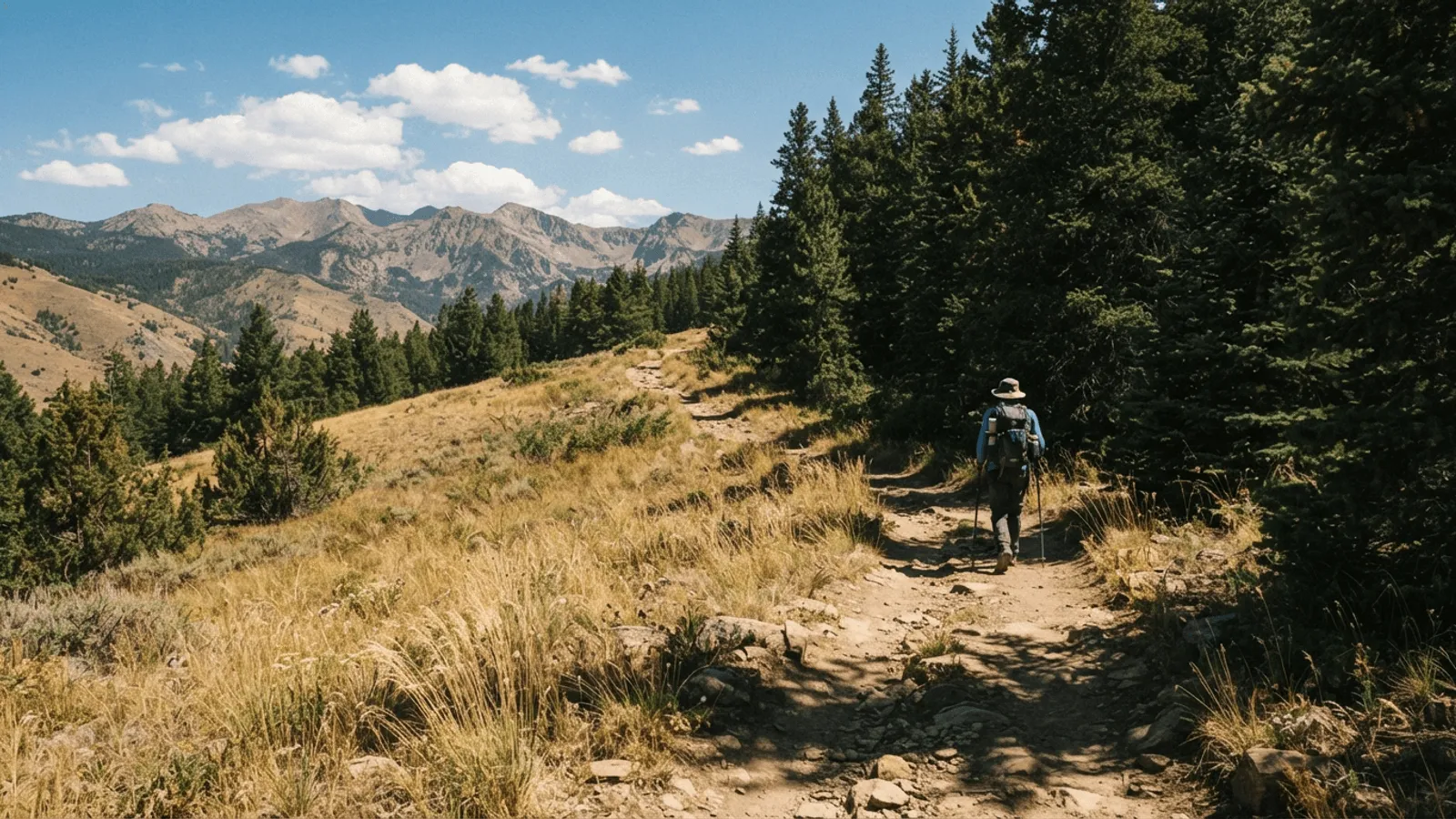
When to go
Best time to walk the Alta Via 1
Late June to late September is the window, set almost entirely by when the rifugi are staffed and open.
Alta Via 1 is a hut route before it is a walking route, and the rifugio calendar decides the season. Most huts along the traverse open in the second half of June and close in the second half of September, though each sets its own dates and they move year to year with snow and staffing, so they must be confirmed with the operator. With the huts shut there is effectively nowhere to sleep between Lago di Braies and the descent to Belluno. Add snow on the highest ground, at 2,752 m near the Lagazuoi and Coldai sections, and the window narrows further.
Late July and August are the busy weeks, and the pressure is concentrated rather than general. The northern half — Braies, Fanes, Lagazuoi, Nuvolau — absorbs day walkers and cable-car visitors as well as through-walkers, so those huts fill first and can be fully booked from the day reservations open in spring. Ferragosto, the Italian holiday week around 15 August, is the hardest period of all. South of Passo Duran the route quietens noticeably; many people find the second half feels like a different trail.
The shoulder weeks are late June and the second half of September, and they pull in opposite directions. Late June brings long daylight, meadows in flower and quieter huts, but snow patches can persist on north-facing traverses and on the ladder and cable sections, where a slip matters, and not every rifugio is open yet. Late September gives crisp air, larch colour and near-empty paths, at the cost of huts closing in sequence, shorter days, and a real chance of the first autumn snowfall arriving on the high passes.
Two weather patterns dominate. Summer heat over the Veneto plain drives afternoon thunderstorms into the Dolomites, often building from midday, which is why hut days are planned to finish early rather than late. And the exposed sections — the Lagazuoi tunnels, the traverses above Coldai — are much worse in wet rock or hail than in dry conditions. Valley temperatures can be warm in July while a pass at 2,700 m sits near freezing in wind. Treat these as typical patterns; any season can behave differently.
Before or after the walk
Tours and visits in Venice
A few well-rated options near Alta Via 1, for the rest days either side of the trail. Prices are the provider’s current starting price.
 St. Mark's Basilica + Doge's Palace Tour & Ticketsfrom €108See details ↗
 Rialto & Jewish Quarter Tourfrom €18See details ↗
 Vivaldi's Four Seasons Concertfrom €34See details ↗
 Murano & Burano Day Trip + Glass-Blowing Showfrom €31.90See details ↗
Affiliate links: if you book through them we may earn a commission, at no extra cost to you. It never changes our stage, distance or luggage information. (Civitatis) How the project is funded
Month by month
Typical conditions through the year. Weather varies from season to season, so treat this as a planning guide and check the forecast close to your dates.
- January Off season
Winter across the range. The traverse is snowbound and the rifugi on the route are shut.
- February Off season
Deep snow and avalanche terrain on the high traverses. The area operates as a ski region only.
- March Off season
Snowpack still substantial above 2,000 m. No hut support and no walkable line through the passes.
- April Off season
Thaw starts in the valleys, but the route stays under snow and the rifugi remain closed.
- May Off season
Lower approaches clear and Lago di Braies reopens to visitors; the high traverse is not yet viable.
- June Shoulder
Huts start opening from mid-month. Quiet and green, with lingering snow possible on north-facing ground.
- July Prime
Full hut service and settled mornings, with afternoon thunderstorms frequent and beds booking out early.
- August Prime
Warmest and busiest, especially the Ferragosto week. Northern rifugi are effectively full all month.
- September Prime
Clear air, larch colour and thinning crowds, though huts begin closing from the middle of the month.
- October Shoulder
Rifugi closed and snow likely on the passes. Only short valley or cable-car day sections remain sensible.
- November Off season
Winter conditions return above the treeline, with no accommodation and very short daylight.
- December Off season
The route is snowbound. Cortina and the Braies valley switch fully to their winter season.
The sweet spot
The first two weeks of September. Every rifugio is still staffed, snow has gone from the exposed traverses, afternoon storms are less frequent than in July, and the northern huts are noticeably easier to book.
Outside the season
From early October to mid-June the staffed rifugi are closed, and with them the only accommodation on the traverse. Snow and ice on the ladder, cable and ledge sections turn moderate ground into technical terrain, and avalanche risk on the north-facing traverses is real all winter. Some huts keep an unstaffed winter room for emergencies. Walking the full Alta Via 1 outside the season is a winter mountaineering project.
Frequently asked
When do the rifugi on Alta Via 1 open and close?
The usual pattern is opening in the second half of June and closing in the second half of September, with the highest huts shortest on both ends. Dates are decided hut by hut and change every year with snow conditions and staffing. Since there is no alternative accommodation on the traverse, confirm each night directly with the rifugio before locking in your itinerary.
Can I walk Alta Via 1 in June?
From roughly the third week of June it is often possible, and it is a quiet, green time to be there. The risks are that some huts have not opened yet and that north-facing traverses and the cabled sections can still hold snow. After a heavy winter that pushes everything later. Check hut opening dates and recent trail reports before planning a June start.
Which month is quietest?
Late September, once the Italian holidays are over and day-visitor numbers drop, is the quietest time with huts still open. Late June is a close second. August, particularly the week around Ferragosto, is the opposite extreme on the northern half of the route. The southern half beyond Passo Duran is quieter than the north in every month.
What about afternoon thunderstorms?
They are a defining feature of Dolomite summers. Heat over the plain feeds convection that commonly builds over the peaks from early afternoon, and storms can be violent on exposed ledges and cabled sections. The standard response is to start early and reach the next rifugio by mid-afternoon. September usually sees fewer storms than July or August, though nothing is guaranteed.
Pick a trail.
No sign-up, no sales call. Just the data, the sources and the links you need to plan a long walk properly.