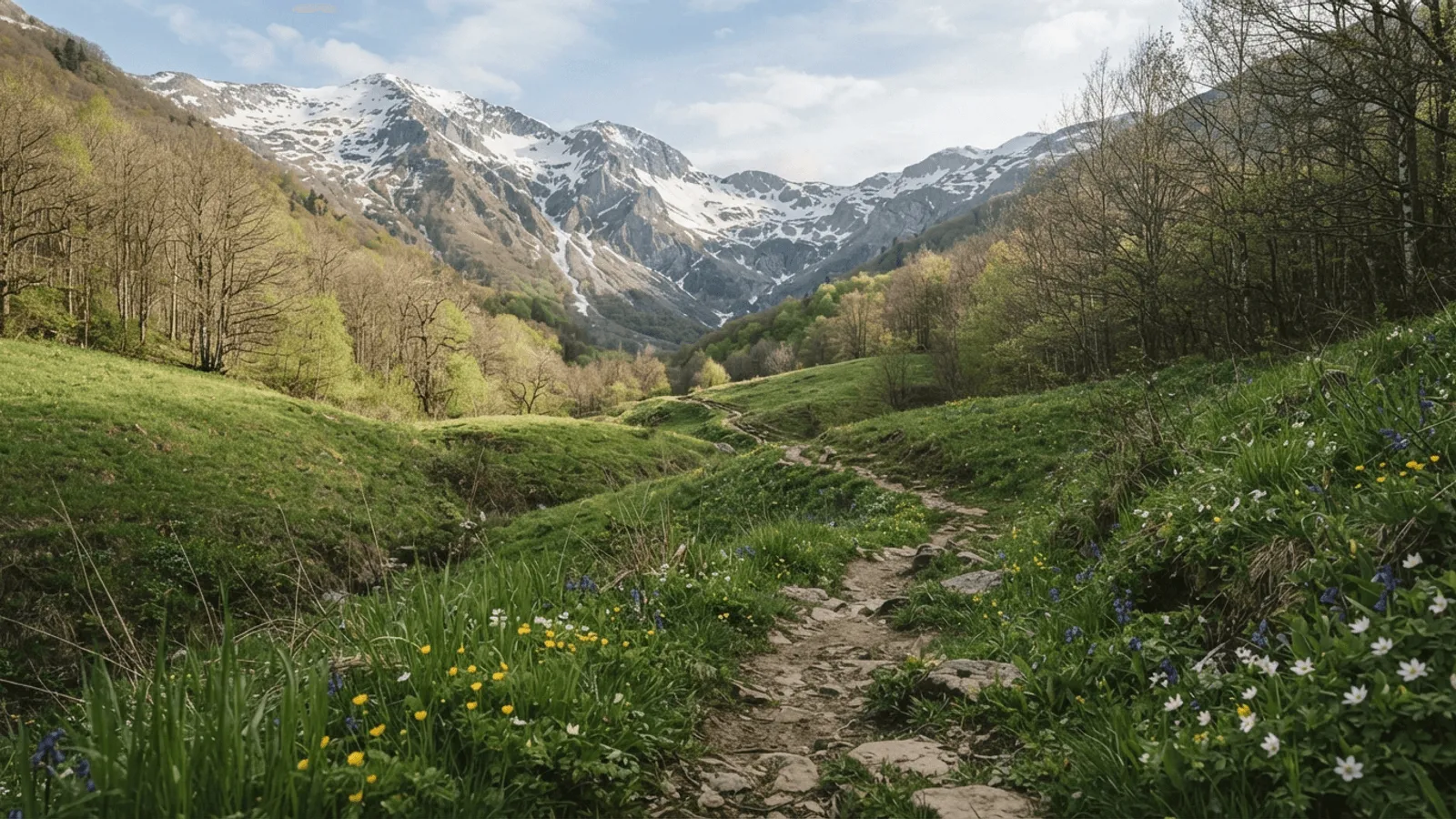
When to go
Best time to walk the Camino Português
March to October is the season, with May, June and September usually the most comfortable months between Porto and Santiago.
The Camino Português is governed by the Atlantic rather than by altitude. Nothing on the route rises above about 410 m, so snow is never the issue; rain is. Northern Portugal and Galicia sit in the path of Atlantic fronts from October through to April, and the granite setts and cobbled lanes that make up much of the Central Route turn genuinely slick when wet. The Coastal Route adds exposure: boardwalks along the dunes carry a hard onshore wind that makes a mild day feel considerably colder.
July and August bring the fullest albergues of the year. Portuguese and Spanish holidays coincide, the coastal towns between Póvoa de Varzim and Viana do Castelo are busy with beach visitors as well as walkers, and beds in the smaller places along the Central Route are gone by mid-afternoon. Because the route is short enough to finish inside a fortnight, it draws people who cannot spare a month for the Francés, and that concentrates demand. The stretch from Tui onwards, the last 100 km, is where numbers rise most sharply.
Spring and autumn are the trade. March and April are green and quiet with fewer walkers, but you should expect several wet days in a fortnight and a real chance that the Ponte de Lima river meadows are sodden. October keeps warm afternoons and empties out after the first week, though daylight shortens and coastal accommodation begins closing for the winter. November is walkable, mild by northern European standards and almost solitary, at the cost of frequent rain and reduced services.
A few patterns are worth planning for. Summer afternoons inland around Barcelos and Ponte de Lima commonly reach the high twenties or low thirties Celsius, while the coast stays several degrees cooler because of the sea breeze. Galicia is wetter than Portugal in every month, so the last three or four days are the most likely to be damp. The 33 km stage from Barcelos to Ponte de Lima is the one that suffers most in heat. These are typical patterns; conditions vary.
City days
Where the Way starts and ends: Porto and Santiago de Compostela
Porto is the classic starting city and Santiago is where the Way ends. Free tours and guided visits for the day before you set off or the day after you arrive. They are city visits, not a Camino package: the walk itself is not included.
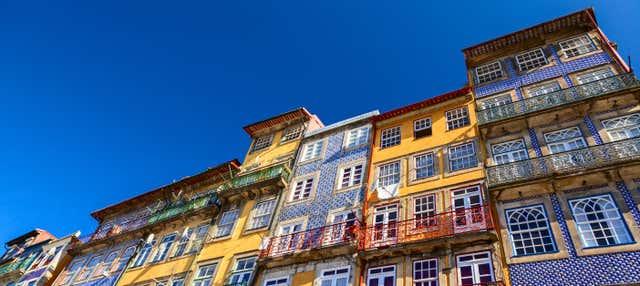 Porto Free Walking TourSee details ↗
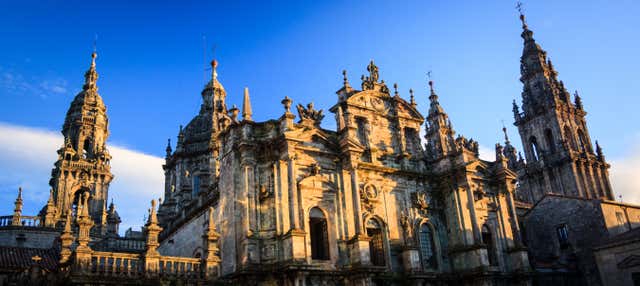 Santiago de Compostela Free Walking TourSee details ↗
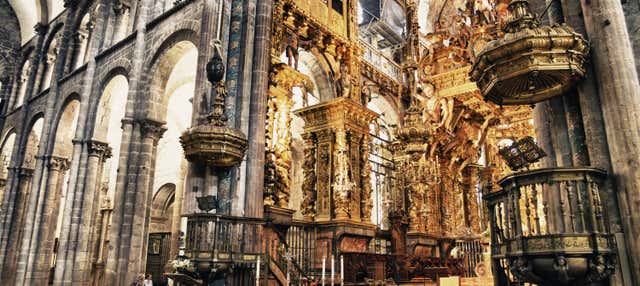 Santiago de Compostela Cathedral & Museum Guided Tourfrom €25See details ↗
Affiliate links: if you book through them we may earn a commission, at no extra cost to you. It never changes our stage, distance or luggage information. (Civitatis) How the project is funded
Before or after the walk
Walk it with luggage transfer included
Self-guided packages on Camino Português: a hotel booked at the end of each stage and your bag moved ahead every morning. Prices are the provider’s current starting price.

Affiliate links: if you book through them we may earn a commission, at no extra cost to you. It never changes our stage, distance or luggage information. (Viator) How the project is funded
Month by month
Typical conditions through the year. Weather varies from season to season, so treat this as a planning guide and check the forecast close to your dates.
- January Off season
Wettest and darkest month. Mild by northern standards, but cobbles are slippery and services are thin.
- February Off season
Still firmly winter: frequent Atlantic fronts, short days and many coastal guesthouses closed.
- March Shoulder
Season opens. Green, quiet and cheap, with rain likely and some albergues only just reopening.
- April Prime
Mild and pleasant walking, camellias out, showers common. Easter briefly fills beds near Santiago.
- May Prime
Arguably the best month: long light, drying tracks, moderate crowds and everything open.
- June Prime
Warm, long days and reliable services, with numbers climbing steadily through the second half.
- July Shoulder
Hot inland and busy throughout. The long Barcelos to Ponte de Lima stage becomes an early start.
- August Shoulder
Busiest month of the year. Coastal towns are full, albergues fill by mid-afternoon, heat peaks inland.
- September Prime
Warm sea, easing crowds and stable weather. One of the strongest months on either route.
- October Shoulder
Still warm and much quieter, but Atlantic rain returns and coastal accommodation starts to close.
- November Shoulder
Mild, very quiet and often wet. Workable for flexible walkers who accept reduced services.
- December Off season
Short days and persistent rain. Few walkers, limited beds, and slick cobbles on the Central Route.
The sweet spot
The second half of May, or the first three weeks of September. Both give warm but not oppressive walking, a drying trail surface, working services along the coast and Central routes, and crowds well short of August.
Outside the season
Nothing closes between December and February: the route is low, waymarked and passable all year. What changes is the Atlantic. Expect several wet days a week, granite setts that are slippery underfoot, and coastal guesthouses and seasonal albergues shut until spring. Daylight allows roughly nine walking hours. Winter walking is realistic here in a way it is not on mountain routes, provided you accept rain and plan beds ahead.
Frequently asked
Can I walk the Camino Português in winter?
Yes. It is one of the more realistic winter Caminos because the terrain is low and the climate mild. The cost is rain: December and January are the wettest months in both northern Portugal and Galicia. Many seasonal albergues close, so you will need to plan stages around what is open and accept a fair amount of road and cobble walking in the wet.
Coastal or Central route — does the season change the choice?
It does. The Coastal Route is at its best from June to September, when the sea breeze offsets the heat and beach towns are fully open. Out of season the same wind makes it cold and many places shut. The Central Route holds its services better in spring and autumn and gives more shelter, which suits March, April, October and November.
Which month is quietest?
January and February see the fewest walkers by far, but with the fewest open beds. For a quiet walk with normal services, late March or the first half of November work well. Bear in mind that from Tui onwards, the final 100 km to Santiago, numbers rise in every month because of the Compostela distance requirement.
How hot does it get in August?
Inland sections around Barcelos, Ponte de Lima and Padrón typically reach the high twenties to low thirties Celsius in the afternoon, and there is limited shade on the farm tracks. The coast usually runs several degrees cooler. Most August walkers start at first light and finish before the worst of it. These are typical figures and any given year can differ.
Pick a trail.
No sign-up, no sales call. Just the data, the sources and the links you need to plan a long walk properly.