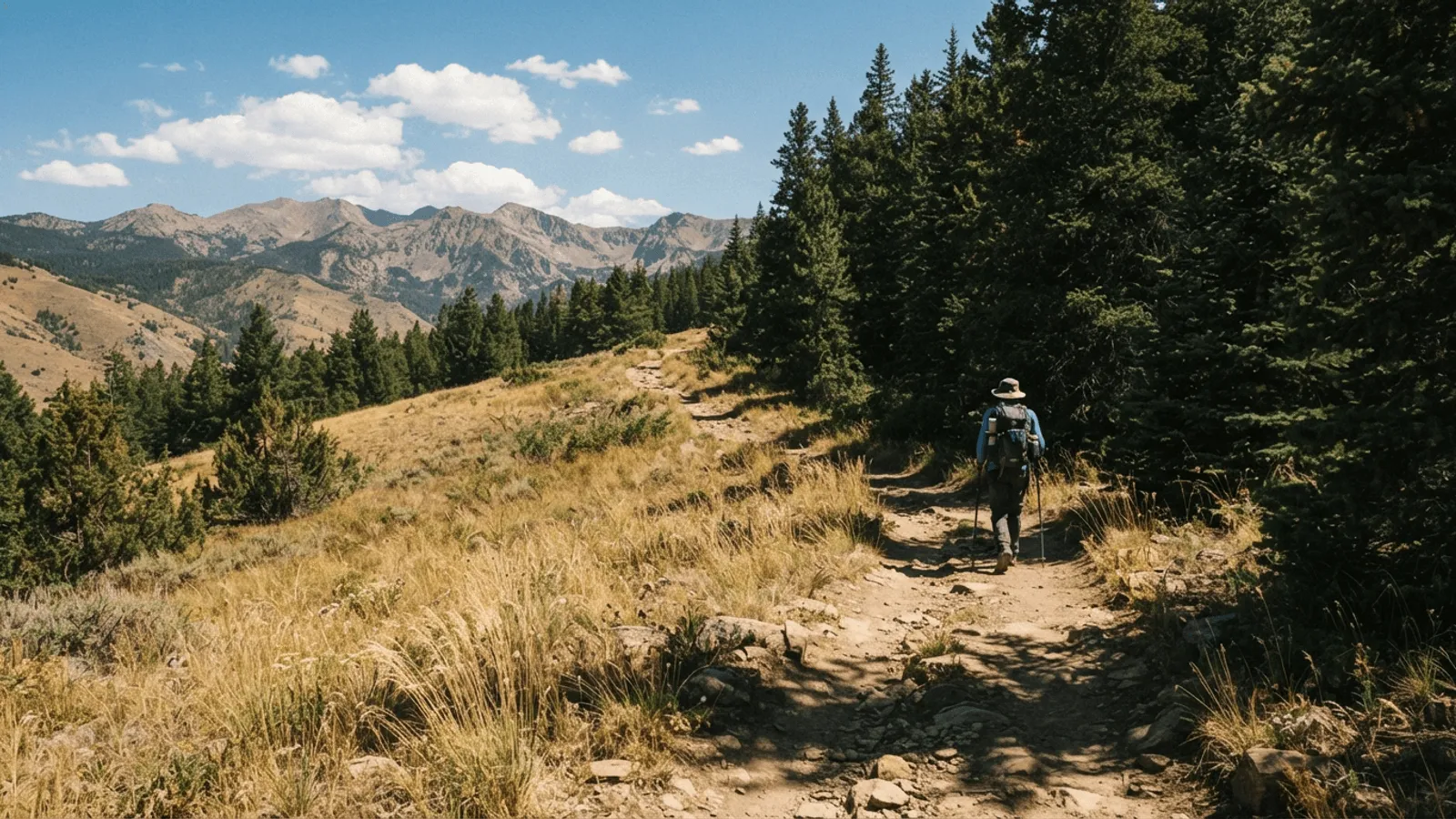
When to go
Best time to walk the Laugavegur
July to early September is the whole season, dictated by when the highland roads open and the huts are staffed.
The Laugavegur has the shortest and most rigid season of any route here, and access decides it. Landmannalaugar sits at the end of an unsealed highland road that is closed by snow and meltwater for most of the year and typically opens somewhere in the second half of June, with the exact date announced by the Icelandic road authority. The mountain huts, run by Ferðafélag Íslands, are usually staffed from around late June to early or mid-September; those dates move year to year and must be confirmed, and beds require booking well in advance.
July and August are the season in full, and demand is concentrated because capacity is fixed. The huts at Hrafntinnusker, Álftavatn, Emstrur and Þórsmörk hold a set number of bunks, reservations commonly open months ahead and sell out quickly, and the alternative is camping beside them in weather that is often hostile. The trail itself is not crowded in the alpine sense, but you will share the route with a steady stream of walkers, and the buses in and out of Landmannalaugar and Þórsmörk run on a summer-only timetable.
The shoulder is late June and September, and both are marginal rather than merely quieter. Late June can still have extensive snow on the high ground around Hrafntinnusker at 1,050 m, which obscures the route markers and makes navigation harder in fog. September brings the first autumn colour in Þórsmörk and far fewer people, but huts close in sequence, the bus service winds down, and the first serious snowfall can arrive without much warning. Neither is a safe default without checking current conditions.
The specifics here are cold, wind and water. Summer daytime temperatures typically sit in single figures to low teens Celsius, and wind chill on the exposed plateau can make that feel far colder; snow is possible in July. Unbridged river crossings, particularly the Bláfjallakvísl and the crossing before Emstrur, run higher on warm afternoons and after rain. Fog on the Hrafntinnusker section is common. Weather changes within an hour. All of this is typical, not a forecast.
Before or after the walk
Tours and visits in Reykjavík
A few well-rated options near Laugavegur, for the rest days either side of the trail. Prices are the provider’s current starting price.
 Landmannalaugar Small-Group Day Tripfrom €162See details ↗
 The South Coast of Iceland Day Tripfrom €129.49See details ↗
 Snaefellsnes Day Tripfrom €126.54See details ↗
Affiliate links: if you book through them we may earn a commission, at no extra cost to you. It never changes our stage, distance or luggage information. (Civitatis) How the project is funded
Month by month
Typical conditions through the year. Weather varies from season to season, so treat this as a planning guide and check the forecast close to your dates.
- January Off season
Arctic winter. The highland road is closed, the huts unstaffed, and the route a winter expedition.
- February Off season
Deep snow, storms and almost no daylight. Access to Landmannalaugar is by specialist vehicle only.
- March Off season
Still full winter on the plateau, with no road access, no hut service and severe wind chill.
- April Off season
Light returns but the highlands stay snowbound. Rivers begin to swell as the melt starts.
- May Off season
Meltwater peaks, the F-roads remain shut, and unbridged crossings are at their most dangerous.
- June Off season
Roads usually open only late in the month and snow lingers at Hrafntinnusker. Huts barely started.
- July Prime
The core month: near-endless daylight, huts staffed, buses running, and snow mostly gone.
- August Prime
Warmest and busiest, with the most reliable river levels and huts booked out well in advance.
- September Shoulder
Autumn colour and quiet trails early on, then huts close, buses stop and snow can return.
- October Off season
Highland roads close, the huts shut, and the plateau reverts to winter conditions with no support.
- November Off season
Storms, darkness and snow. No transport, no accommodation and no realistic walking window.
- December Off season
Four hours of twilight and full winter weather. The route exists only as a ski or expedition line.
The sweet spot
Mid-July to mid-August. Snow has cleared the Hrafntinnusker plateau, the huts and buses are fully running, daylight is effectively unlimited, and river crossings are at their most predictable — though beds need booking months ahead.
Outside the season
From mid-September to late June the highland road to Landmannalaugar is closed, the buses do not run and the huts are unstaffed, so the route loses its access, its shelter and its rescue margin at once. Snow covers the markers on the plateau, and unbridged rivers are at their most dangerous during the spring melt. Winter crossings happen, but as guided or expedition-style trips with specialist vehicles, not as walks.
Frequently asked
When do the Laugavegur huts open?
The Ferðafélag Íslands huts are usually staffed from around late June to early or mid-September, with the higher Hrafntinnusker hut often opening last. Dates depend on snow clearance and are set each year, so confirm with the association before planning. Beds sell out months in advance for July and August, and booking is required rather than optional on this route.
Can I walk the Laugavegur outside the summer?
Not as a normal trek. The highland road to Landmannalaugar is closed for most of the year, the buses run only in summer, and the huts are unstaffed outside the season. Snow buries the route markers on the plateau and the weather can be genuinely dangerous. Off-season crossings are done as guided winter expeditions with specialist transport, not as independent walks.
How bad are the river crossings?
They are the crux of the route in any month. Several rivers are unbridged, and levels rise on warm afternoons when melt is strongest and after heavy rain. The usual advice is to cross early in the day, unclip your pack, use poles and wade rather than rock-hop. In high water the right decision is to wait or turn back. Conditions change daily.
Which month is quietest?
The first half of September, once the school holidays are over across Europe, is the quietest time with any hut service still running. Late June can also be quiet but often has snow on the high section. July and August are the busiest by a wide margin, and hut reservations rather than trail traffic are what you actually feel.
Pick a trail.
No sign-up, no sales call. Just the data, the sources and the links you need to plan a long walk properly.