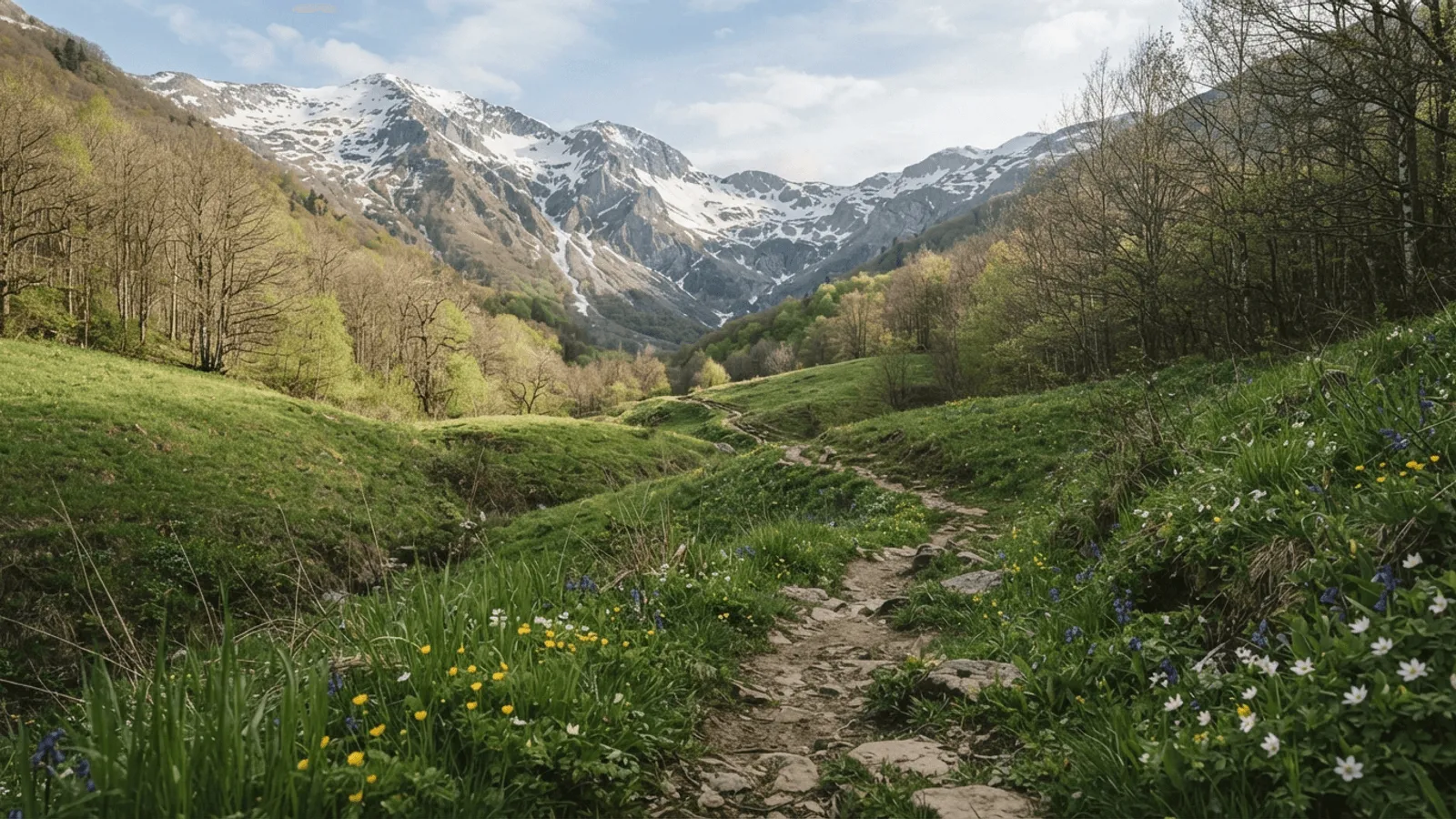
When to go
Best time to walk the Kumano Kodo
March to November is the season, with April, May, October and November usually the most comfortable walking.
The Kumano Kodo is governed by the Japanese weather calendar rather than by altitude. The Kii Peninsula is one of the wettest places in Japan, and three periods stand out: tsuyu, the rainy season, which typically runs from early June to mid-July; the hot, humid heart of summer; and the typhoon season, which peaks in late August and September and can close trail sections outright after heavy rain. Landslides and washouts do occur, and the route sometimes reopens on diversions, so current trail status matters here more than on most European routes.
The two busy periods are spring and autumn, and they are busy in a Japanese way: the trail stays civil, but the beds vanish. Accommodation on the Nakahechi is mostly small family-run minshuku and ryokan in Takahara, Chikatsuyu and Yunomine, often with only a handful of rooms, and they fill months ahead for the cherry blossom weeks, Golden Week at the start of May, and the autumn colour in November. Because the standard itinerary depends on staying in specific villages, a single full night can force a bus transfer.
The shoulder months carry different penalties. March is cool, quiet and clear, but some accommodation is still winding up for the season and the higher passes can be cold. June and July mean rain, mist through the cedar plantations and steps that turn slick with moss, though the forest in cloud is atmospheric and prices are low. Late August and September are warm and green with the fewest walkers, but this is when typhoons are most likely and when a trail closure can rearrange a week.
The specifics worth planning for are heat and rain rather than cold. July and August afternoons commonly sit in the low thirties Celsius with very high humidity, and the climbs out of Takijiri and up to Ogumotori-goe are strenuous in that air. Rainfall totals across the peninsula are high in every month, so waterproofs and quick-dry clothing earn their place year-round. Winter brings occasional light snow on the higher passes. These are typical patterns, and any given year can differ.
City days
In Osaka and Kyoto, on the way to the trail
Kansai airport, near Osaka, is the usual way in, and many walkers finish with a few days in Kyoto. Kii-Tanabe, the gateway to the trail, is about two and a half hours away by train. Free walking tours for those city days; they are not a Kumano Kodo package.
Affiliate links: if you book through them we may earn a commission, at no extra cost to you. It never changes our stage, distance or luggage information. (Civitatis) How the project is funded
Before or after the walk
Tours and visits in Kii-Katsuura · Kōyasan
A few well-rated options near Kumano Kodo, for the rest days either side of the trail. Prices are the provider’s current starting price.
 Kii-Katsuura tuna auction at dawn: private guided visitfrom €51See details ↗
 Kōyasan half day with a licensed guide: Okunoin, Kongōbu-ji, Garanfrom €94See details ↗
 Kōyasan full day, private: temples, Okunoin cemetery and shōjin lunchfrom €114See details ↗
Affiliate links: if you book through them we may earn a commission, at no extra cost to you. It never changes our stage, distance or luggage information. (Viator) How the project is funded
Month by month
Typical conditions through the year. Weather varies from season to season, so treat this as a planning guide and check the forecast close to your dates.
- January Off season
Cold on the passes with occasional snow, short days, and many small guesthouses closed for the season.
- February Off season
Quietest and coldest. Walkable in mild spells, but services are limited and daylight is short.
- March Shoulder
Season opens: cool, clear air and few walkers, with some accommodation only just reopening.
- April Prime
Cherry blossom and fresh growth. Comfortable temperatures, and the first serious competition for rooms.
- May Prime
Excellent walking before the rains, though Golden Week at the start fills every minshuku on the route.
- June Shoulder
Tsuyu arrives: persistent rain, mist in the cedar forest and slippery stone steps on the descents.
- July Shoulder
Rainy season ends mid-month, then heat and humidity build sharply. Hard work on the long climbs.
- August Shoulder
Hottest and most humid, with very few walkers and a rising chance of typhoon disruption late on.
- September Shoulder
Typhoon peak. Green and quiet between systems, but trail closures after heavy rain are common.
- October Prime
Humidity drops, skies clear and walking turns superb. One of the two strongest months of the year.
- November Prime
Autumn colour and crisp, dry air, offset by heavy demand for the small village guesthouses.
- December Off season
Cold and short-dayed, with light snow possible on the higher passes and reduced accommodation.
The sweet spot
Late October to mid-November, or the second half of April. Autumn brings dry, clear air and colour in the cedar and maple; spring brings blossom and mild days. Both need rooms booked several months ahead.
Outside the season
December to February closes little formally: the trail is public and the shrines stay open. But many small minshuku that make the standard itinerary possible shut or reduce service, and bus timetables thin. Higher sections such as Ogumotori-goe can carry light snow and ice, and daylight is short for the long Chikatsuyu to Hongū stage. Winter walking is realistic for well-prepared walkers who confirm accommodation and transport first.
Frequently asked
When is the rainy season on the Kumano Kodo?
Tsuyu usually runs from around early June to the middle of July on the Kii Peninsula, bringing long spells of rain, low cloud in the forest and slippery stone steps on the steeper descents. It does not make the trail impassable, and it is one of the quietest and cheapest times to walk. Start and end dates vary by year and are announced regionally.
Should I avoid typhoon season?
Late August through September carries the highest risk, and the practical concern is not walking in a storm but the aftermath: heavy rain triggers landslides and washouts, and sections of the Nakahechi are sometimes closed for repair. If you go then, build in a spare day, check the local trail status before each stage, and be ready to use the bus along the valley.
Which month is quietest?
February is quietest overall, and August and early September are the quietest months within the walking season, because of heat and typhoon risk. March and early June are quiet with reasonable conditions. The busiest periods are Golden Week at the beginning of May, the cherry blossom weeks in April, and the autumn colour in November, when small guesthouses book out early.
How far ahead do I need to book accommodation?
Further than most people expect. The villages along the Nakahechi have a small number of family-run minshuku and ryokan, often with only a few rooms each, and the standard itinerary depends on staying in specific places. For April, May, October and November, several months ahead is normal, and Golden Week can require reservations closer to half a year in advance.
Pick a trail.
No sign-up, no sales call. Just the data, the sources and the links you need to plan a long walk properly.