
Stages & pacing
Kumano Kodo stages and daily distances
Seven days is the usual Nakahechi walk, an average of about 17 km a day across 120 km of forested ridge.
On the Kumano Kodo the accommodation dictates everything, and there is very little of it. Takahara, Chikatsuyu, Hongū and Yunomine Onsen have a handful of minshuku and ryokan each, most with a few rooms only, and they book out months ahead in spring and autumn. That is why the stages are so uneven: 4 km from Takijiri-oji to Takahara, 10 km on to Chikatsuyu, then 25 km to Hongū. Vending machines and village shops cover water, but long ridge sections have nothing at all.
Five thousand metres of climb over 120 km is what people miss when they read that the high point is only 700 m. The route never crosses a mountain; it crosses dozens of small ones, on stone steps laid centuries ago. The 25 km from Chikatsuyu to Hongū is the clearest example, a full day of short climbs and descents that adds up to far more effort than the modest profile suggests. The steps are the real issue: relentless, uneven, and hard on knees in descent.
The Nakahechi divides into three natural parts. The opening, Takijiri-oji to Takahara at 4 km and on to Chikatsuyu at 10 km, is two gentle half-days that many people combine. The middle is the long crossing to Hongū and the great shrine there, with the 4 km detour to the hot springs at Yunomine Onsen as the reward. The final part reaches the coast, usually with a river boat down to Shingū, then Koguchi and the 15 km climb to Kumano Nachi Taisha.
The main error is booking the walking before the beds. On this route the rooms decide the itinerary, and in April, May, October and November they go early. The second is assuming a 15 km day is a short one: Koguchi to Kumano Nachi Taisha climbs steeply in stone steps and takes most walkers six or seven hours. The third is skipping Yunomine Onsen to save half a day, which removes the best rest on the whole route.
City days
In Osaka and Kyoto, on the way to the trail
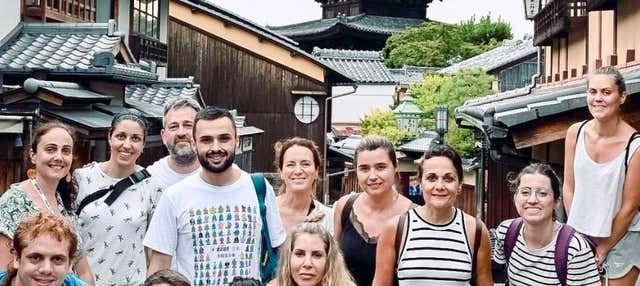
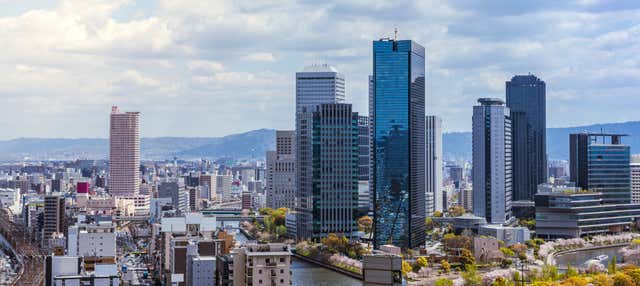
Kansai airport, near Osaka, is the usual way in, and many walkers finish with a few days in Kyoto. Kii-Tanabe, the gateway to the trail, is about two and a half hours away by train. Free walking tours for those city days; they are not a Kumano Kodo package.

Affiliate links: if you book through them we may earn a commission, at no extra cost to you. It never changes our stage, distance or luggage information. (Civitatis) How the project is funded
Before or after the walk
Tours and visits in Kii-Katsuura · Kōyasan
A few well-rated options near Kumano Kodo, for the rest days either side of the trail. Prices are the provider’s current starting price.
 Kii-Katsuura tuna auction at dawn: private guided visitfrom €51See details ↗
 Kōyasan half day with a licensed guide: Okunoin, Kongōbu-ji, Garanfrom €94See details ↗
 Kōyasan full day, private: temples, Okunoin cemetery and shōjin lunchfrom €114See details ↗
Affiliate links: if you book through them we may earn a commission, at no extra cost to you. It never changes our stage, distance or luggage information. (Viator) How the project is funded
Three ways to pace it
Averages worked out from the route’s real distance and ascent, so you can see what each pace actually asks of you day to day.
- Per day
- 24 km
- Ascent per day
- 1,000 m
Five days merges the short opening stages and compresses the coastal finish. It suits walkers flying in and out on fixed dates, and it costs you the onsen evenings, which are half of the reason people come here.
- Per day
- 17.1 km
- Ascent per day
- 710 m
Seven days, about 17 km daily, matches the ryokan spacing and leaves time for the shrines and the baths. Dinner is served early in Japanese guesthouses, which quietly enforces an early finish in any case.
- Per day
- 10 km
- Ascent per day
- 420 m
Twelve days is the long version, adding one of the other old routes, extra nights at Yunomine Onsen and proper rest days. It suits walkers treating this as a pilgrimage rather than as a distance to be covered.
These are suggested splits, not an official stage list. Real days are set by where the beds are — always check the accommodation before fixing an itinerary.
Representative stages
- Day 1 Takijiri-oji → Takahara 4 km
- Day 2 Takahara → Chikatsuyu 10 km
- Day 3 Chikatsuyu → Hongū 25 km
- Day 4 Hongū → Yunomine Onsen 4 km
- Day 5 Koguchi → Kumano Nachi Taisha 15 km
- Sample total 58 km
The days people underestimate
Chikatsuyu to Hongū at 25 km is the long day, and the only one where a slow start costs you daylight. Harder still for its length is Koguchi to Kumano Nachi Taisha: 15 km with a sustained climb of stone steps that locals long ago named for breaking bodies. Neither day is technical, and both are relentless in a way the distances hide.
If you have less time
Three days covers the heart of it. Takijiri-oji to Takahara, Takahara to Chikatsuyu, then the long day to Hongū and a night at Yunomine Onsen: that is the classic short Nakahechi and the section with the best-preserved paved path. Buses run from Hongū back to Kii-Tanabe if you cannot spare the days to reach the coast.
Frequently asked
How many days does the Kumano Kodo take?
The Nakahechi from Takijiri-oji to Kumano Nachi Taisha takes about seven days at roughly 17 km a day. Five is possible by merging the short opening stages, and twelve if you add another of the old routes. Most itineraries are shaped by ryokan availability rather than by walking capacity.
Are the stages fixed by accommodation?
Largely, yes. Takahara, Chikatsuyu, Hongū and Yunomine Onsen are small settlements with a few family-run guesthouses each. Once those are booked, the stage lengths follow. It is the reason a 4 km day and a 25 km day sit next to each other in almost every published itinerary for this route.
Is the Kumano Kodo hard?
Moderate, with a catch. No single climb is big, since the high point is around 700 m, but the route accumulates roughly 5,000 m of ascent on stone steps, and steps are harder on knees than slopes. Walkers who cope well use poles and treat the descents, not the climbs, as the difficulty.
Can I use luggage transfer between stages?
On the main Nakahechi sections, yes, between the larger guesthouse villages, though the service is not universal and some smaller minshuku are not covered. Where transfer is unavailable, bags can often be forwarded onward from Kii-Tanabe or Hongū instead, which is worth arranging when you book.
Apply it to a real route
Each trail guide gives you the stages, the season and the permits to plug into this method.