When to go
Best time to walk the Via Francigena
April to October is the season, with late April to early June and all of September the most comfortable walking.
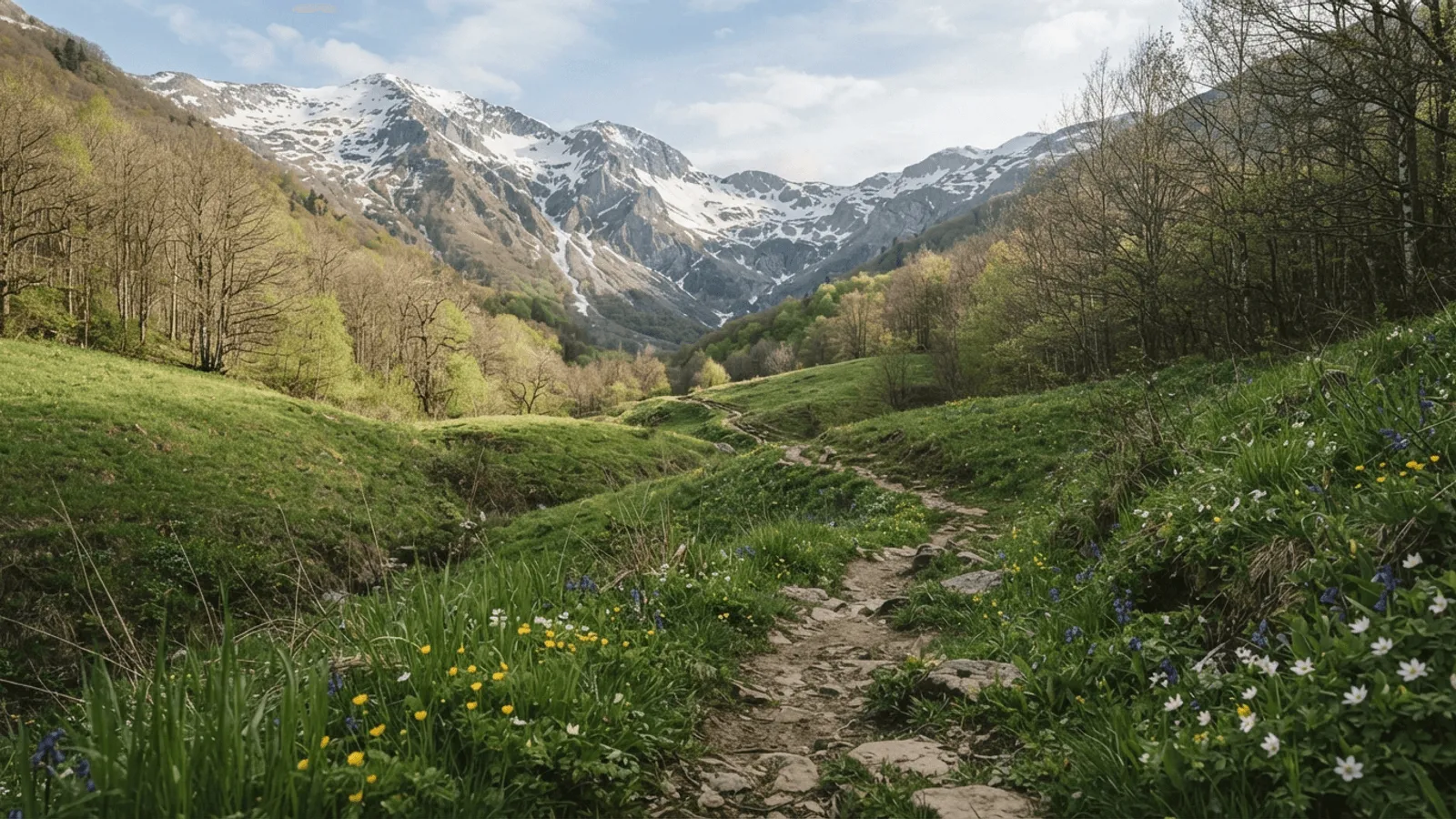
Nothing on the Lucca to Rome section is high enough for snow to matter — the route tops out around 810 m — so the season is set by heat and by mud. From roughly late June to early September, central Italy bakes, and long stretches through the Val d’Orcia and the Lazio farmland have no shade at all. At the other end of the year, the clay soils of the crete senesi between Siena and Radicofani hold water for days after rain, turning white roads into deep, sticky going that adds hours to a stage. Between those two extremes lies the walking season.
Peak here does not mean crowded in the Camino sense. Even in the busiest weeks the Via Francigena carries a fraction of the traffic of the Camino Francés, and you can walk a whole morning without meeting anyone. What does fill up is accommodation, because the pilgrim network is small: parish hostels and ostelli in villages such as Gambassi Terme, Radicofani and Bolsena have only a handful of beds, and one group can take them all. Spring and autumn are the busiest for organised groups, and Jubilee years raise demand along the final stages into Rome.
The shoulder months carry a clear trade. March and early April are green and quiet, with wildflowers and the Tuscan hills at their best, but this is also the wettest part of the year and the clay tracks can be at their worst. October and November reverse the balance: the light is superb, the vendemmia has passed, temperatures are comfortable, and rain returns steadily as the month goes on while some seasonal accommodation closes. November also brings short daylight to stages that regularly run over 25 km.
Plan around heat first. July and August afternoons in inland Tuscany and northern Lazio commonly reach the mid-thirties Celsius, and the long open stages, such as Siena to Ponte d’Arbia, offer little relief. Water points exist in the villages but can be far apart on the ridge sections. Autumn and spring bring thunderstorms that arrive quickly over the hills. The Apennine and Radicofani sections are exposed to wind. These are typical patterns rather than a forecast, and any season can behave differently.
Before or after the walk
Tours and visits in Rome
A few well-rated options near Via Francigena, for the rest days either side of the trail. Prices are the provider’s current starting price.
 Vatican Museums & Sistine Chapel Guided Tourfrom €74.25See details ↗
 Colosseum, Roman Forum & Palatine Hill Tourfrom €49See details ↗
 Pantheon Skip The Line Ticketfrom €11See details ↗
 Rome Underground Tourfrom €80See details ↗
Affiliate links: if you book through them we may earn a commission, at no extra cost to you. It never changes our stage, distance or luggage information. (Civitatis) How the project is funded
Month by month
Typical conditions through the year. Weather varies from season to season, so treat this as a planning guide and check the forecast close to your dates.
- January Off season
Cold, wet and short-dayed. Clay tracks are at their muddiest and pilgrim hostels are largely closed.
- February Off season
Still winter inland, with frost on the higher ground and very limited accommodation open.
- March Shoulder
Green and quiet, hostels reopening, but rain is frequent and the crete senesi hold deep mud.
- April Prime
Wildflowers, mild days and full services. Showers likely, and Easter fills beds near Rome.
- May Prime
Probably the best month: warm but not hot, long daylight, dry tracks and comfortable evenings.
- June Shoulder
Fine early in the month, then heat builds sharply. Open stages start demanding pre-dawn starts.
- July Shoulder
Hot and shadeless across Tuscany and Lazio. Walkable only with early starts and careful water planning.
- August Shoulder
Hottest month, and many village businesses close for the Italian holidays. Hard going midday.
- September Prime
Heat eases, light turns golden, harvest under way. Among the strongest months on the whole route.
- October Prime
Comfortable temperatures and superb colour, with rain becoming more frequent late in the month.
- November Shoulder
Quiet and atmospheric, but wet, muddy underfoot and short on daylight for the longer stages.
- December Off season
Deep off-season: persistent rain, minimal pilgrim accommodation and barely nine hours of light.
The sweet spot
Mid-May, or the second half of September. Both give dry clay tracks, temperatures that make a 25 km stage pleasant rather than punishing, full hostel services, and enough daylight for an unhurried arrival.
Outside the season
Between December and February the route stays open but most small parish hostels and seasonal ostelli close, leaving hotels as the fallback and reshaping the stage lengths. The clay tracks of the crete senesi become difficult after rain, and daylight allows only nine walking hours for stages that often exceed 25 km. Winter walking is possible for well-organised walkers who book everything ahead, but it is a different exercise.
Frequently asked
Can I walk the Via Francigena in winter?
Physically yes, since there is no snow issue below about 810 m, but the support network largely shuts. Parish hostels and seasonal ostelli close, so you fall back on hotels and B&Bs, which changes both cost and stage planning. Add persistent rain, deep mud on the clay sections and short daylight, and winter becomes a project for experienced, flexible walkers only.
Is July or August too hot to walk to Rome?
It is the hardest time of year. Inland afternoons commonly reach the mid-thirties Celsius and long sections across the Val d’Orcia and northern Lazio have no shade whatsoever. People do walk it, starting before dawn and stopping by late morning, carrying three litres or more. Many village services also close for the mid-August holidays, which reduces resupply options.
Which month is quietest?
January and February are emptiest but poorly served. Among months with normal services, late October and early November are quiet, and July and August see few independent walkers because of the heat. The route is never crowded by Camino standards; the constraint is the small number of beds in each village rather than the number of people on the path.
Does a Jubilee year change when I should go?
It affects the final approach more than the countryside. Holy Years draw far more pilgrims towards Rome, and accommodation in the last few stages through Lazio, plus in Rome itself, becomes much harder to secure at short notice. If you are walking during one, book the closing stages well ahead and consider shoulder months rather than spring and autumn peaks.
Pick a trail.
No sign-up, no sales call. Just the data, the sources and the links you need to plan a long walk properly.