
Stages & pacing
Alta Via 1 stages and daily distances
Eleven days is typical on Alta Via 1, roughly 11 km a day, but with close to 600 m of climb in each of them.
Alta Via 1 is a rifugio route, and the huts decide the days. There is nothing between them: no villages, no shops, and above 2,000 m very little reliable water outside the huts themselves, so most walkers fill up at breakfast and again at lunch. Distances between rifugi are short by valley standards, and the opening leg from Lago di Braies to Rifugio Biella is only 7 km, because the huts sit where the terrain allows, on saddles and shelves rather than at neat intervals. Beds are limited and half-board is the norm.
Six and a half thousand metres of climb over 120 km is a punishing ratio, and it explains stages that look absurd on paper. A day of 11 km can hold 900 m up and 900 m down on scree and rock. Rifugio Coldai to Rifugio Tissi is 6 km and still a proper half-day once you have crossed the ridge and the broken ground beneath the Civetta wall. The high point of 2,752 m falls in the Lagazuoi section, and altitude thins your pace as much as gradient does.
The route reads as three parts. The northern opening from Lago di Braies climbs quickly to Rifugio Biella and crosses the Fanes plateau: wide, pale and comparatively kind. The middle, from Rifugio Fanes to Rifugio Lagazuoi and on to Rifugio Nuvolau, is war-tunnel and via ferrata country, the most photographed and the most exposed. The southern half, past Rifugio Coldai and Rifugio Tissi below Civetta, is rougher and quieter, before the long descent out of the mountains towards Belluno.
The classic error is booking flights on the assumption that 11 km days are half-days. They are not. The second is finishing in the wrong place: the final descent to Belluno is long and unrewarding, and many walkers stop earlier and take a bus, which is worth deciding in advance rather than at three in the afternoon on the last day. The third is arriving without a via ferrata set for the aided sections and then improvising on the cable.
Before or after the walk
Tours and visits in Venice
A few well-rated options near Alta Via 1, for the rest days either side of the trail. Prices are the provider’s current starting price.
 St. Mark's Basilica + Doge's Palace Tour & Ticketsfrom €108See details ↗
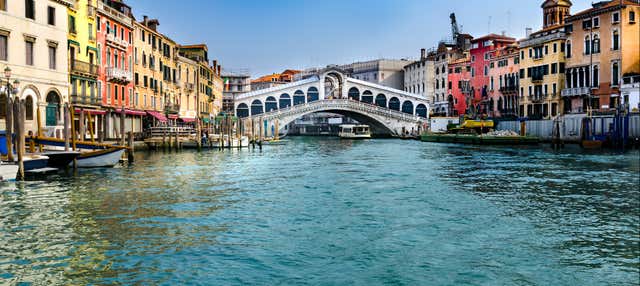 Rialto & Jewish Quarter Tourfrom €18See details ↗
 Vivaldi's Four Seasons Concertfrom €34See details ↗
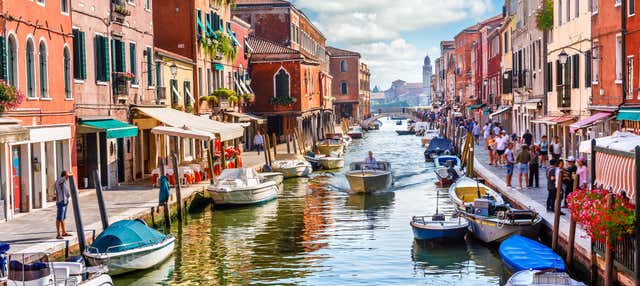 Murano & Burano Day Trip + Glass-Blowing Showfrom €31.90See details ↗
Affiliate links: if you book through them we may earn a commission, at no extra cost to you. It never changes our stage, distance or luggage information. (Civitatis) How the project is funded
Three ways to pace it
Averages worked out from the route’s real distance and ascent, so you can see what each pace actually asks of you day to day.
- Per day
- 13.3 km
- Ascent per day
- 720 m
Nine days means combining rifugi, and on this route that is limited by where huts exist rather than by fitness. It suits confident scramblers, and it costs you the exposed sections, which are slow whether you hurry or not.
- Per day
- 10.9 km
- Ascent per day
- 590 m
Eleven days matches how the rifugi are spaced, about 11 km and 600 m of ascent daily. Days end mid-afternoon, which on a hut route is not laziness but the way half-board and weather windows work.
- Per day
- 10 km
- Ascent per day
- 540 m
Twelve days adds one short day or a weather buffer, which on a route with this much exposure is the most useful thing in your plan. It suits anyone unused to scree, ladders and via ferrata cable.
These are suggested splits, not an official stage list. Real days are set by where the beds are — always check the accommodation before fixing an itinerary.
Representative stages
- Day 1 Lago di Braies → Rifugio Biella 7 km
- Day 2 Rifugio Biella → Rifugio Fanes 13 km
- Day 3 Rifugio Fanes → Rifugio Lagazuoi 14 km
- Day 4 Rifugio Lagazuoi → Rifugio Nuvolau 12 km
- Day 5 Rifugio Coldai → Rifugio Tissi 6 km
- Sample total 52 km
The days people underestimate
Rifugio Fanes to Rifugio Lagazuoi is longer and higher than the map suggests and finishes on the highest ground of the route, at 2,752 m. The section past Rifugio Coldai below Civetta is short on kilometres and heavy on loose rock. The last day down towards Belluno drops well over 1,000 m and ruins more knees than any ascent on the walk.
If you have less time
The northern half is the better short trip. Lago di Braies to Rifugio Lagazuoi and down to the Falzarego pass takes four or five days, covers Rifugio Biella, Rifugio Fanes and the war tunnels, and ends on a bus route. It is also the busiest stretch of the whole Alta Via, so book huts as early as you possibly can.
Frequently asked
How many days does Alta Via 1 take?
Eleven days is typical over 120 km, an average near 11 km a day with about 600 m of ascent. Nine days is possible by merging huts, and twelve gives you a spare day for weather. The short distances are misleading: terrain, not kilometres, sets how long each day takes.
Are the Alta Via 1 stages fixed by the rifugi?
Effectively, yes. There is no wild camping and no accommodation between huts, so your itinerary is whichever chain of rifugi you manage to book. That is why people reserve in January for August. Where a hut is full, the usual fix is a longer day rather than an extra one.
Which is the hardest day?
Most walkers name the stage up to Rifugio Lagazuoi, for its height gain and the exposed ground near the top. The descent towards Belluno on the final day is a different kind of hard, over 1,000 m down on tired legs. Neither is technical if you are steady on rock and cable.
Can I walk Alta Via 1 without via ferrata equipment?
The main line is a walking route, but several sections are aided with cable, and the popular variants near Lagazuoi and Nuvolau are properly equipped ferrate. A light harness and lanyard weigh little and widen your options in bad weather. Without them, plan the bypasses before you set out.
Apply it to a real route
Each trail guide gives you the stages, the season and the permits to plug into this method.