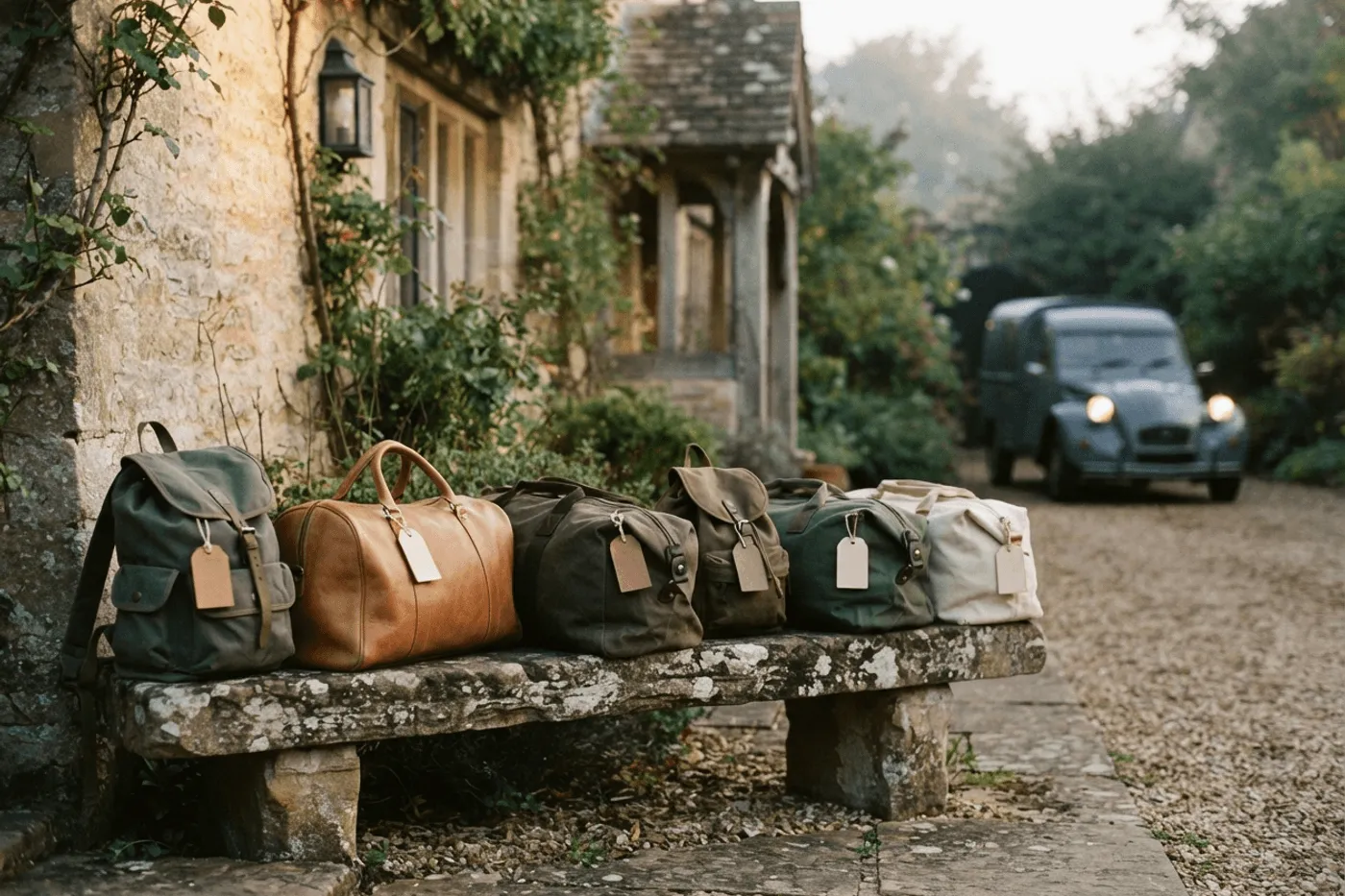
Luggage transfer
Luggage transfer on the Camino de Santiago
Bag transfer runs daily along the whole Camino Francés, and using it here is ordinary practice rather than an admission of weakness.
The work is done by overlapping van networks rather than one company driving 790 km. You leave your bag in the hall of your albergue or hotel before the morning cut-off, usually eight o’clock, with a tag or envelope carrying the next address and the fee. A driver collects during the morning, sorts loads at a depot or a roadside handover, then delivers to the following night’s address. Most bags are waiting by early afternoon. On stages where a driver runs a long loop through the hills, they arrive nearer five.
City days
On arrival in Santiago de Compostela
Guided visits and day trips from Santiago, for the day after you collect the Compostela. They are city visits, not a Camino package: the walk itself is not included.
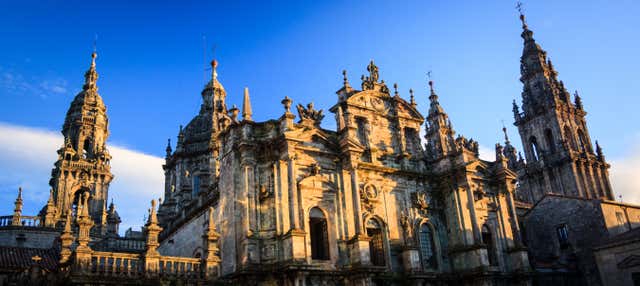 Santiago de Compostela Free Walking TourSee details ↗
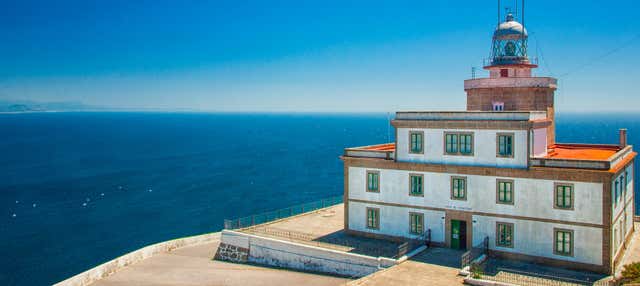 Finisterre, Muxía, & Costa da Morte Day Tripfrom €52See details ↗
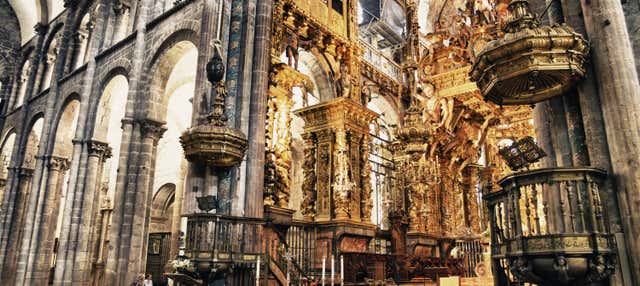 Santiago de Compostela Cathedral & Museum Guided Tourfrom €25See details ↗
Affiliate links: if you book through them we may earn a commission, at no extra cost to you. It never changes our stage, distance or luggage information. (Civitatis) How the project is funded
Before or after the walk
Walk it with luggage transfer included
Self-guided packages on Camino de Santiago: a hotel booked at the end of each stage and your bag moved ahead every morning. Prices are the provider’s current starting price.
 Camino Francés from Sarria: 7 days with hotels and bag transferfrom €945See details ↗
 Self-guided Camino Francés from Sarria: 8 days, 6 walkingfrom €2,701.20See details ↗
Affiliate links: if you book through them we may earn a commission, at no extra cost to you. It never changes our stage, distance or luggage information. (Viator) How the project is funded
The route earns this from its geography. It threads a corridor of villages settled for a thousand years, and the N-120 and A-12 shadow it for hundreds of kilometres. Almost every place you sleep sits on tarmac: Zubiri, Estella, Nájera, Belorado, Carrión de los Condes, Astorga, Sarria, Palas de Rei. The Camino climbs, but it rarely leaves the road network for long. Even Roncesvalles and O Cebreiro have a road to the door. Where a van genuinely cannot follow, as on the ridge over Alto del Perdón, it simply drives round.
On a normal day this cuts the pack down to water, a waterproof, food, documents, phone and whatever your feet demand. Five or six kilos instead of twelve. That matters more here than on rougher routes, because the damage on the Camino is cumulative and comes from surfaces rather than gradients: compacted gravel, roadside track and tarmac, day after day, for a month. Walkers who arrive with an untested rucksack tend to switch to transfers somewhere in the second week, usually after a tendon complains on the way into Burgos.
Booking is stage by stage rather than for the whole month, which is what makes the system forgiving. You decide the night before, or the same morning in a town with a depot. Because the bag follows an address and not a person, the transfer plan is really an accommodation plan — the next bed must be confirmed before the bag leaves. If a blister stops you early, you ring the number on the tag and redirect it. Municipal albergues that open at one o’clock will not receive bags before then, so drivers leave them with a bar or a neighbour.
What it costs
Reckon on roughly €5 to €9 per bag per stage across Spain, with the Pyrenean crossing and detours off the main corridor at the upper end. Some operators sell a discounted block of several days. Rates drift year to year and differ by section, so confirm the current figure before you send anything.
Which stages work
Every standard overnight stop between Saint-Jean-Pied-de-Port and Santiago can be served. The awkward ones are Orisson, high on the Napoleon route, where a narrow lane restricts collection times; the shelter at Manjarín, which has no service at all; and rural casas set back down farm tracks, where a phone call and a later delivery are normal.
Frequently asked
Where exactly do I leave the bag in the morning?
In the entrance hall of your albergue or hotel, with the tag filled in and the payment envelope attached, before the stated cut-off. Most places have a marked corner for it. Hospitaleros are used to the routine and will point you at the right spot, but nobody chases you — an unlabelled bag stays where it is.
Does bag transfer work over the Pyrenees on the first day?
Yes. Services run from Saint-Jean-Pied-de-Port to Roncesvalles, and also to Orisson for anyone splitting the climb. It is one of the most useful legs on the route, since that stage carries around 1,200 m of ascent. Expect to pay a little more than a flat-country stage, and book it before you arrive in Saint-Jean.
Is there a weight limit?
Most Spanish operators cap a single bag at somewhere between 15 and 20 kg and will not accept anything they cannot lift alone. Two smaller bags usually cost two fees rather than one. Fragile items travel at your risk, so keep documents, phone, money and medication in the day pack you carry.
What happens if I change where I am sleeping?
Ring the number printed on the tag as early as you can. Drivers are still on the road until mid-afternoon and can usually redirect within the same section. If your bag has already been dropped at the original address, the accommodation will hold it overnight and the next day’s driver takes it on for another fee.
Check your route
Each trail guide states plainly how transfer works on that route.