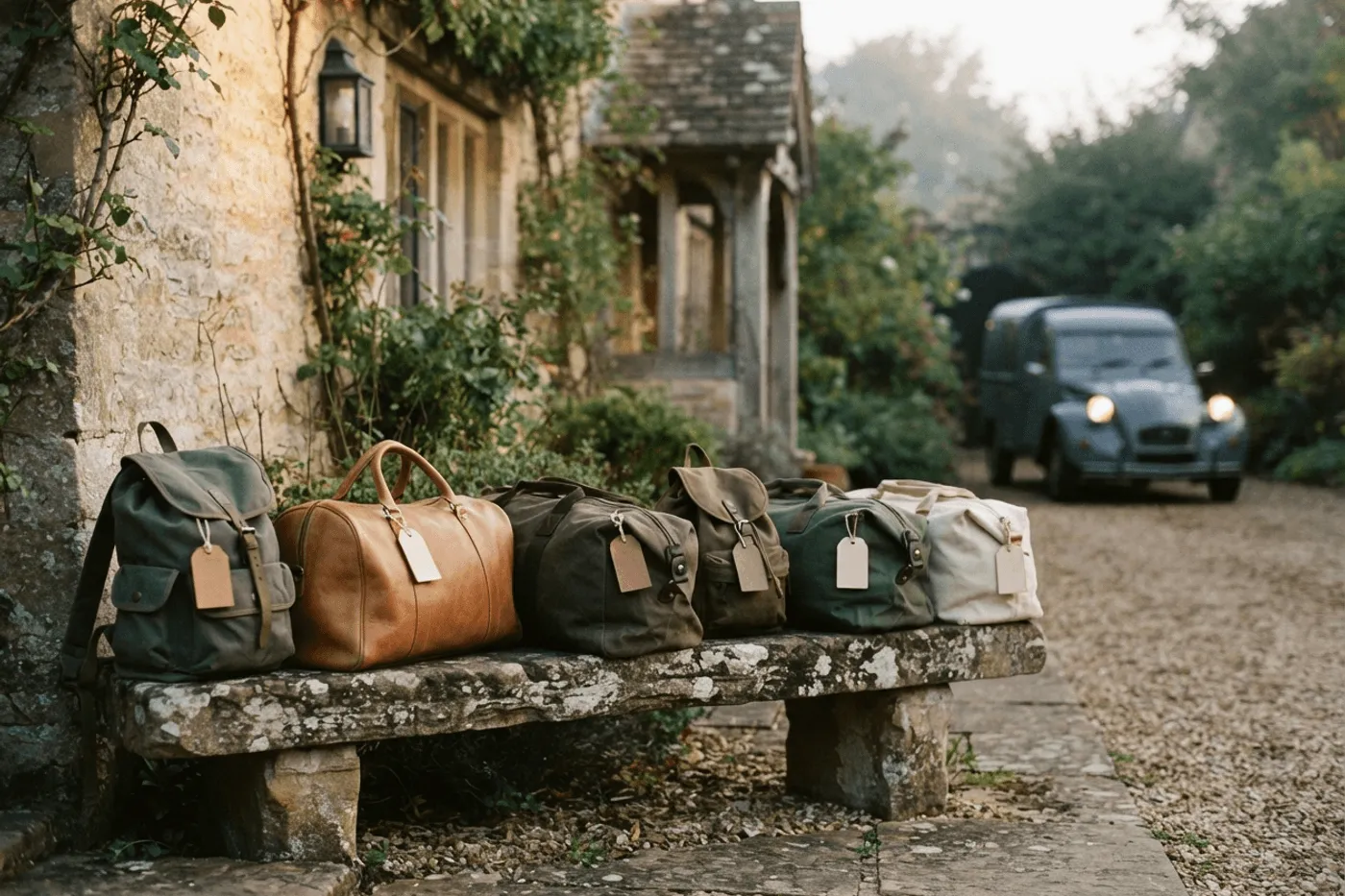
Luggage transfer
Luggage transfer on the Camino Português
Bag transfer runs the full length of the Portuguese Way in season, on the Central route and along the Coastal variant alike.
Two networks share the route and hand over at the river. Portuguese firms cover Porto to Valença, Galician ones take Tui to Santiago, and a bag booked end to end changes hands on the international bridge without you noticing. Leave it at reception before eight, tagged with the next address, and it is generally at the following guesthouse between midday and three. Cash in an envelope is still common on the Portuguese half; the Galician operators mostly take card or bank transfer when you book online the evening before.
City days
Where the Way starts and ends: Porto and Santiago de Compostela
Porto is the classic starting city and Santiago is where the Way ends. Free tours and guided visits for the day before you set off or the day after you arrive. They are city visits, not a Camino package: the walk itself is not included.
 Porto Free Walking TourSee details ↗
 Santiago de Compostela Free Walking TourSee details ↗
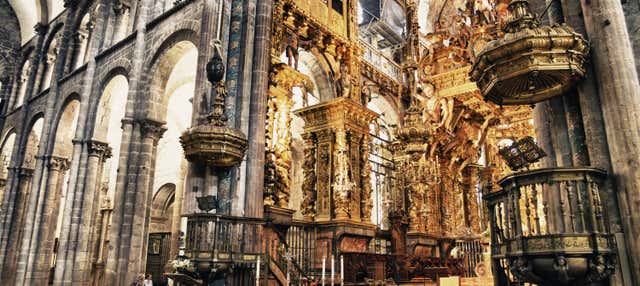 Santiago de Compostela Cathedral & Museum Guided Tourfrom €25See details ↗
Affiliate links: if you book through them we may earn a commission, at no extra cost to you. It never changes our stage, distance or luggage information. (Civitatis) How the project is funded
Before or after the walk
Walk it with luggage transfer included
Self-guided packages on Camino Português: a hotel booked at the end of each stage and your bag moved ahead every morning. Prices are the provider’s current starting price.

Affiliate links: if you book through them we may earn a commission, at no extra cost to you. It never changes our stage, distance or luggage information. (Viator) How the project is funded
Nothing about this route makes it hard for a van. The Central variant follows the old road corridor north through the Minho — Vairão, Rates, Barcelos, Ponte de Lima, Rubiães — then crosses to Tui and continues by Redondela, Pontevedra, Caldas de Reis and Padrón, all of it within a few minutes of a public road. The Labruja climb is the only stretch where the driver takes a different line. On the Coastal route the sequence of Vila do Conde, Esposende, Viana do Castelo, Caminha and Baiona sits on the coast road throughout.
What you actually carry is a light day pack, and on this route that is worth more than it sounds. The Camino Português is flat by the numbers — around 3,500 m of ascent in 240 km — but a great deal of it is granite calçada, uneven setts that concentrate load on the forefoot and heel. Weight on your back multiplies that pressure with every step. Walkers with any history of plantar fasciitis or a tender metatarsal usually find the cobbles tolerable with five kilos and punishing with eleven.
Beds are thinner on the ground in Portugal than in Spain, so most people fix the Portuguese half in advance and then let the bag follow the bookings. A day or two of notice is enough for the transfer itself outside July and August. Two things need care. If you switch between the Central and Coastal routes partway, tell the operator early, because the two are served by different drivers. And if you plan the Espiritual variant with the boat from Vilanova de Arousa, arrange the bag by road for that day.
What it costs
Expect around €5 to €10 per bag per stage, with the cross-border leg into Tui and the longer coastal hops toward the top of that band. Booking several stages together sometimes reduces the per-day rate. Prices are reset each season and vary between operators, so confirm before committing to a whole itinerary.
Which stages work
Every stage from Porto to Santiago is served on both the Central and Coastal routes. The fiddly stops are Rubiães, a scattered hamlet where the drop point may not be your bed; quintas and farmhouse rooms down unnamed lanes; and the Espiritual variant boat day, when your bag must travel by road instead.
Frequently asked
Does the same service cover Portugal and Spain?
Usually you book one service and it subcontracts across the border, or two operators run a standing handover at Valença and Tui. Either way it is invisible to you if the addresses are correct. Because it is a handover rather than a single van, give an extra hour of margin on the day you cross the Minho.
Can I use bag transfer on the Coastal route too?
Yes. The Caminho da Costa runs beside a road for almost its entire length, so coverage is as good as on the Central route and sometimes better, since the accommodation is more hotel-like. The one thing to flag when booking is the point where you rejoin the Central route near Redondela, which changes which driver handles you.
Do albergues in Portugal accept delivered bags?
Private albergues, hostels and guesthouses do. Municipal and parish albergues often open only in the afternoon and will not take a bag before an hospitalero arrives, so drivers leave it next door, at a café, or return later. If you are relying on municipal beds, check the opening hour before you book the transfer.
Is transfer worth it if I am only walking from Tui?
The last 100 km from Tui is the busiest and flattest section, and plenty of walkers there carry everything without difficulty. It becomes worthwhile if you are walking consecutive 25 km days on cobbles, travelling with a wheeled case rather than a rucksack, or want to keep a fixed daily pace regardless of how your feet feel.
Check your route
Each trail guide states plainly how transfer works on that route.