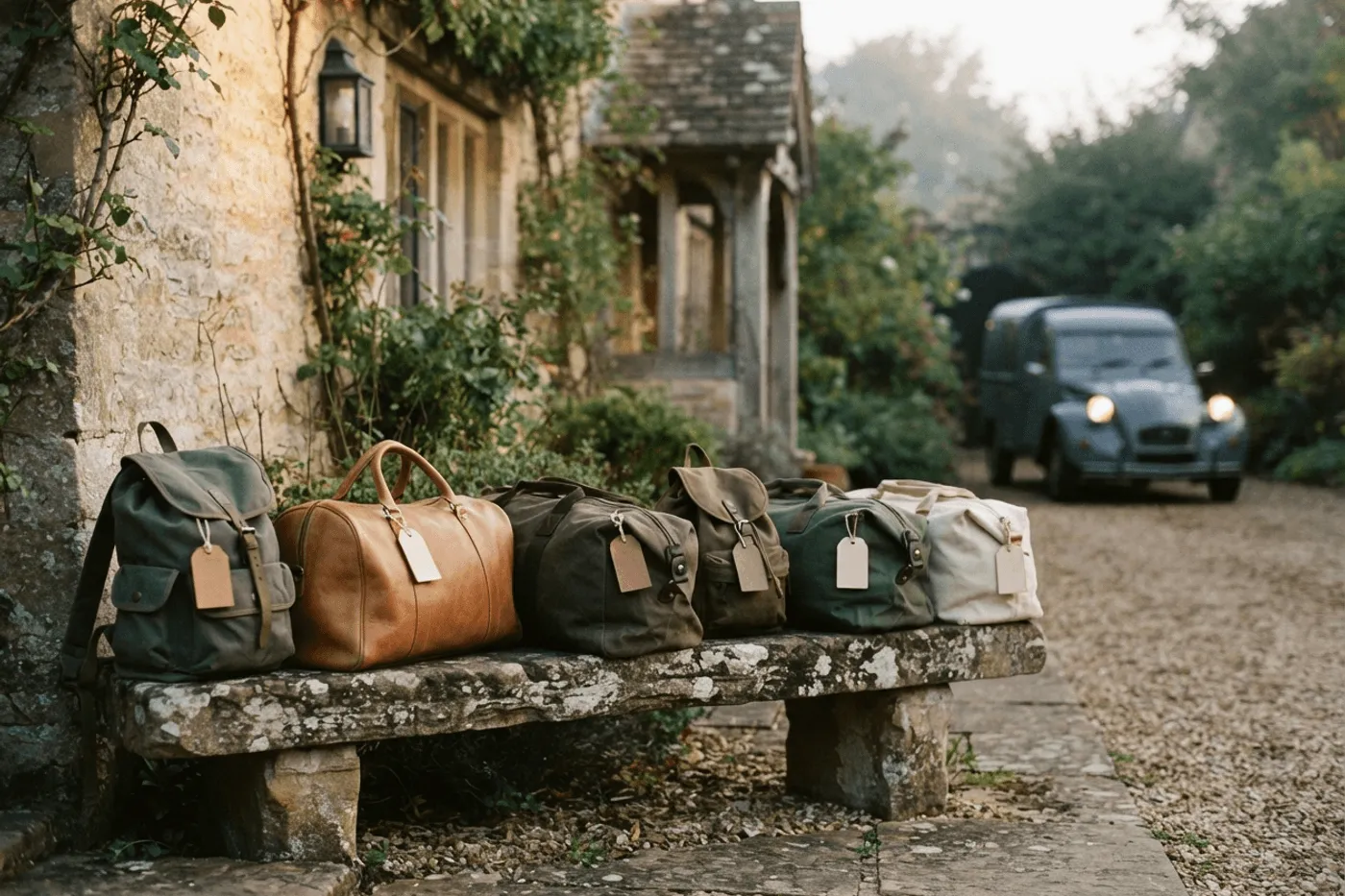
Luggage transfer
Luggage transfer on the Hadrian’s Wall Path
Bag transfer covers the whole Wall corridor daily in season, and there is no stage where a van cannot follow you.
A handful of operators cover the corridor from Newcastle to the Solway, running through the main walking season from around Easter to October. The routine is the same each morning: bag out by nine, labelled with the next address, delivered by mid-afternoon to the guesthouse, inn or farm where you are staying. Several of the same firms also run a shuttle that collects walkers from villages off the line of the Wall and returns them to the path next morning, which is how the accommodation gaps in the central section are normally solved.
The Military Road, the B6318, was built along the Wall in the eighteenth century and still runs beside it for some thirty kilometres, with the A69 in the Tyne valley below. That is why the corridor is so easy to serve. Chollerford, Once Brewed, Gilsland, Walton, Carlisle, Burgh by Sands and Bowness-on-Solway all sit on tarmac. Even the wildest-feeling part, the crags between Sewingshields and Steel Rigg, is rarely more than a kilometre from a road. At the eastern end the path is urban, with the Tyne, the Metro and Newcastle’s quayside hotels alongside.
The day pack here is modest by long-distance standards, because the walking is easy and the corridor is populated. Waterproofs, a warm layer, a litre or two of water and lunch cover most days. The exception is the central section: between Chollerford and Gilsland the shops thin out, the switchback over the crags is steeper than the elevation profile suggests, and the ground gets boggy after rain. Carrying that stretch with a full pack turns a pleasant day into a long one, which is a large part of why the service is so widely used.
Beds in the middle of the route are the scarce resource, so book those first and let the bag plan follow. Operators want the complete list of nights and generally charge per bag per day, with the whole week paid up front. If you are staying off-path in Hexham, Haltwhistle or Brampton, say so when booking, because that is an extra leg for the driver. One further point worth knowing: the National Trail asks walkers to avoid the wettest winter months to limit erosion of the archaeology, and most transfer services do not operate then anyway.
What it costs
Expect roughly £8 to £12 per bag per day, so about £55 to £85 for a seven-day crossing, with a surcharge where accommodation lies well off the path. A 20 kg limit per bag is standard. Operators publish fresh rates each season, so confirm the current year’s price rather than working from an old quote.
Which stages work
Every stage from Wallsend to Bowness-on-Solway is served, including the crags section around Steel Rigg and Once Brewed. The extra complications are nights spent off-path in Hexham, Haltwhistle or Brampton, which add a leg, and city-centre hotels in Newcastle and Carlisle that only accept deliveries during staffed reception hours.
Frequently asked
Which direction should I walk, and does it affect the service?
West to east from Bowness keeps the prevailing wind and rain behind you; east to west from Wallsend saves the best scenery for the middle and is the more common choice. Transfer companies serve both directions, but say which you are walking when booking, since the van rotation is built around a direction.
What if my accommodation is a few miles off the path?
That is normal in the central section, where beds are scarce. Tell the operator the exact address, as it adds a leg to the run and sometimes a surcharge. Many of the same firms run a walker shuttle between the path and the off-line villages, so the bag and you can arrive by different routes on the same evening.
Is there a weight limit and can I send two bags?
Around 20 kg per bag is the standard limit, and a second bag is charged as a second fee. Keep your Hadrian’s Wall passport, phone, money, waterproofs and lunch on you. Rucksacks travel better than hard suitcases on farm tracks, and a stuff sack over the bag keeps the northern weather out.
Does the service run in winter?
Mostly not. Operators generally work from around Easter to October, and the National Trail asks people to stay off the most fragile turf sections in the wettest months to protect the earthworks beneath. Winter walkers should plan to be self-supported, and to expect closed accommodation across the central stretch of the Wall.
Check your route
Each trail guide states plainly how transfer works on that route.