Stages & pacing
Camino de Santiago stages and daily distances
Most walkers take 33 days from Saint-Jean-Pied-de-Port to Santiago, averaging close to 24 km a day over 790 km.
Stage lengths on the Camino Francés are set by where the villages fall, not by the terrain. Albergues, bars and fountains appear every few kilometres across most of the route, so a day can end almost anywhere, and the standard splits are really just the places with enough beds. The exceptions sit at either end of the spectrum: the Pyrenean crossing, where the only accommodation between Saint-Jean-Pied-de-Port and Roncesvalles is a few hours up at Orisson, and parts of the meseta, where villages thin out and shade disappears for hours at a time.
Twelve thousand metres of ascent over 790 km sounds like a mountain route and walks like a flat one for most of its length. The climbing is concentrated rather than spread out. The first day out of Saint-Jean-Pied-de-Port gains around 1,200 m in 25 km, and the pull up to O Cebreiro on the Galician border does something similar late in the walk, when legs are already worn. On the days in between, kilometres and hard surfaces decide how you feel at four in the afternoon, not gradient.
In practice the route reads as four blocks. Saint-Jean-Pied-de-Port to Roncesvalles and on through Pamplona and Puente la Reina is the mountain-and-wine opening, roughly a week of walking. Navarre and La Rioja then give way to the meseta, long open stages where 24 km passes quickly if you start early. The hills before Ponferrada and the Cruz de Ferro at 1,505 m form the third block. Finally Galicia: Sarria to Portomarín at 22 km, Arzúa to O Pedrouzo at 19 km, and the last 20 km into Santiago de Compostela.
The common error is treating the first week as a fitness test. Walkers who arrive straight from a desk job and push 30 km days out of Roncesvalles tend to meet their tendons somewhere around Logroño. The second mistake is booking every night in advance across a month, which removes the option of stopping short when a foot goes wrong. The third is underestimating Galicia: daily distances shrink but the ground rolls constantly, and beds between Sarria and Santiago fill by mid-afternoon in summer.
City days
On arrival in Santiago de Compostela
Guided visits and day trips from Santiago, for the day after you collect the Compostela. They are city visits, not a Camino package: the walk itself is not included.
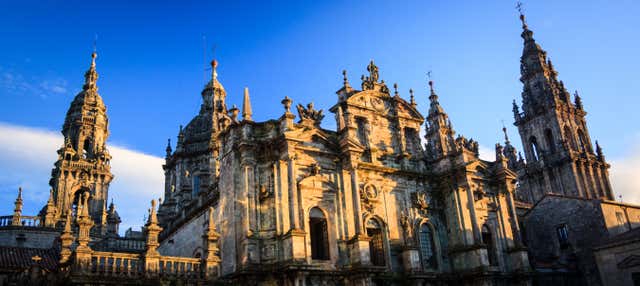 Santiago de Compostela Free Walking TourSee details ↗
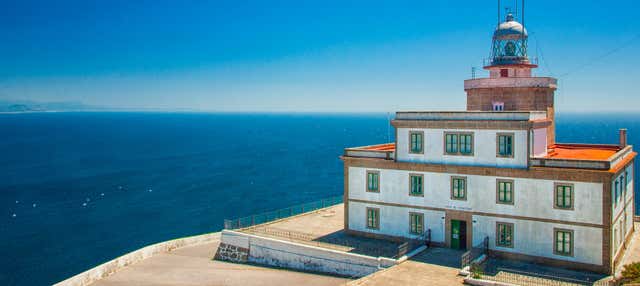 Finisterre, Muxía, & Costa da Morte Day Tripfrom €52See details ↗
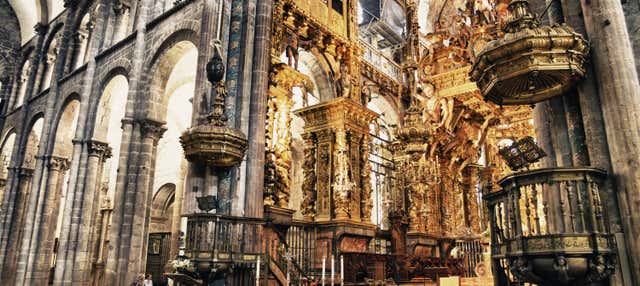 Santiago de Compostela Cathedral & Museum Guided Tourfrom €25See details ↗
Affiliate links: if you book through them we may earn a commission, at no extra cost to you. It never changes our stage, distance or luggage information. (Civitatis) How the project is funded
Before or after the walk
Walk it with luggage transfer included
Self-guided packages on Camino de Santiago: a hotel booked at the end of each stage and your bag moved ahead every morning. Prices are the provider’s current starting price.
 Camino Francés from Sarria: 7 days with hotels and bag transferfrom €945See details ↗
 Self-guided Camino Francés from Sarria: 8 days, 6 walkingfrom €2,701.20See details ↗
Affiliate links: if you book through them we may earn a commission, at no extra cost to you. It never changes our stage, distance or luggage information. (Viator) How the project is funded
Three ways to pace it
Averages worked out from the route’s real distance and ascent, so you can see what each pace actually asks of you day to day.
- Per day
- 26.3 km
- Ascent per day
- 400 m
Around 26 to 30 km a day suits walkers with recent long-distance mileage and a fixed return date. It costs you the towns, since you pass through Burgos and León rather than stopping, and leaves no margin for blisters.
- Per day
- 23.9 km
- Ascent per day
- 360 m
The 33-day rhythm at roughly 24 km a day is the one the accommodation network is built around. Beds, meals and bag transfer all line up, and you finish most days with the afternoon free.
- Per day
- 22.6 km
- Ascent per day
- 340 m
Thirty-five days, or fewer kilometres with rest days in Burgos and León, suits first-time long-distance walkers and anyone easing back after injury. It costs holiday time rather than money, since a slower day rarely costs more.
These are suggested splits, not an official stage list. Real days are set by where the beds are — always check the accommodation before fixing an itinerary.
Representative stages
- Day 1 Saint-Jean-Pied-de-Port → Roncesvalles 25 km
- Day 2 Pamplona → Puente la Reina 24 km
- Day 3 Sarria → Portomarín 22 km
- Day 4 Arzúa → O Pedrouzo 19 km
- Day 5 O Pedrouzo → Santiago de Compostela 20 km
- Sample total 110 km
The days people underestimate
The Pyrenean day from Saint-Jean-Pied-de-Port to Roncesvalles is the obvious one: 25 km with about 1,200 m of climb, on legs that have not walked far in months. Less expected are the meseta stages in July heat, and the climb to O Cebreiro in week four. The descent towards Molinaseca after the Cruz de Ferro punishes knees more than any ascent on the route.
If you have less time
With a week, the final 100 km from Sarria is the standard answer and the only version that qualifies for a Compostela: Sarria to Portomarín, then on through Arzúa and O Pedrouzo to Santiago de Compostela. It is also the busiest stretch of the whole route. If the certificate does not matter, León to Santiago over a fortnight is the better walk.
Frequently asked
How many days does the Camino Francés take?
Thirty-three days of walking is the usual figure, an average of about 24 km a day over 790 km, and 35 days is the comfortable version with a rest day or two built in. Walkers averaging 28 to 30 km finish in under a month, though foot injuries are markedly more common at that pace.
Are there official Camino stages?
No single official list exists. Guidebooks publish splits and most of them agree, because the beds are in the same villages, but nothing obliges you to use them. Walking half a stage out of phase with the printed itinerary is one of the simplest ways to find quieter albergues in high season.
Can I walk 30 km a day on the Camino?
Physically, yes, on a route with this little gradient. The limiting factor is surface rather than climb: compacted gravel and tarmac beside roads for hours at a time. Most people who plan 30 km stages from day one reduce them within a week. Building up over the first fortnight works far better.
How should I split the Camino if I only have two weeks?
Two weeks covers roughly 300 to 350 km at a normal pace. León to Santiago de Compostela is the popular choice and includes O Cebreiro and the Galician stages. Saint-Jean-Pied-de-Port to Burgos is the alternative if you would rather have the Pyrenees and the wine country than the finish.
Apply it to a real route
Each trail guide gives you the stages, the season and the permits to plug into this method.