Stages & pacing
Tour du Mont Blanc stages and daily distances
Eleven days is the usual circuit, an average of about 15 km a day, but each of those days carries roughly 900 m of climb.
On the Tour du Mont Blanc the refuges set the stages, and there is no negotiating with them. Beds sit where a col ends and a valley begins, and between them there is often nothing for five or six hours. Water is not a constraint, since streams and village fountains are frequent, but booking is, because refuges fill months ahead for July and August. The practical consequence is that your itinerary is fixed on the day you reserve, and a stage you find too long cannot simply be broken in half.
Ten thousand metres of ascent over 170 km is the number that matters. A day averages 15 km, which sounds trivial, and about 900 m of climb, which is not. The stage from Les Contamines towards Refuge de la Croix crosses Col du Bonhomme with well over 1,000 m of gain in 13 km; the kilometre count suggests a morning, the profile means a full day. Descents cost as much as climbs here, and the long drop into Courmayeur is where knees usually complain first.
The loop divides by country. The French opening runs Chamonix to Les Houches and on to Les Contamines, gentle by the standards of what follows. The Italian section begins at Refuge de la Croix, drops to Courmayeur and then climbs the Val Ferret. Switzerland takes over from La Fouly to Champex-Lac, the greenest and least severe part of the circuit. The last block returns to France by Col de Balme or the Fenêtre d’Arpette variant, finishing with a 20 km day back into Chamonix beneath the Aiguilles Rouges.
Most errors here come from reading distances instead of profiles. Fifteen kilometres a day reads like a walking holiday and climbs like a mountain route. The second mistake is building a fast itinerary and then booking refuges that do not line up with it, which leaves one enormous day in the middle. The third is treating the lifts and buses as cheating. Using the Les Houches cable car or the Courmayeur bus is how many walkers keep an eleven-day plan intact after a bad day.
City days
On arrival in Geneva
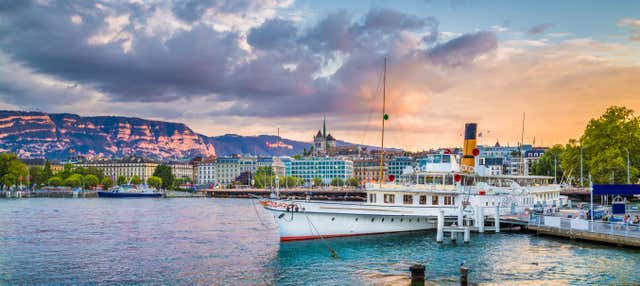
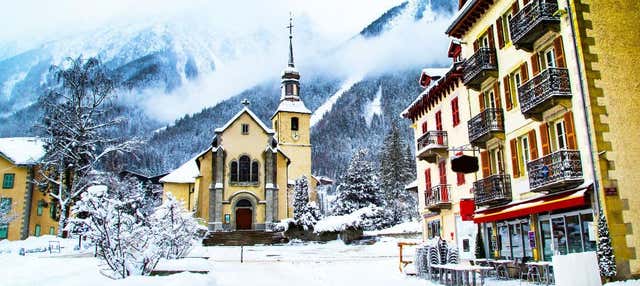
Geneva is the practical airport for Chamonix. With a few hours to spare before the transfer, or an afternoon before the flight home, there is a short cruise on the lake from the city quays. For anyone in your group who is not walking, there is also a coach day trip from Geneva to Chamonix, with commentary in English. Neither is part of the trail.
Affiliate links: if you book through them we may earn a commission, at no extra cost to you. It never changes our stage, distance or luggage information. (Civitatis) How the project is funded
Before or after the walk
Tours and visits in Chamonix · Courmayeur
A few well-rated options near Tour du Mont Blanc, for the rest days either side of the trail. Prices are the provider’s current starting price.
 Tandem paragliding over Chamonix, take-off from Plan-Prazfrom €179See details ↗
 Skyway Monte Bianco from Courmayeur: up to Punta Helbronner (3,466 m)from €147See details ↗
 Rafting on the Arve at the foot of Mont Blanc, Chamonixfrom €77See details ↗
Affiliate links: if you book through them we may earn a commission, at no extra cost to you. It never changes our stage, distance or luggage information. (Viator) How the project is funded
Three ways to pace it
Averages worked out from the route’s real distance and ascent, so you can see what each pace actually asks of you day to day.
- Per day
- 24.3 km
- Ascent per day
- 1,430 m
Seven days means merging stages that each already carry around 900 m of climb. It suits experienced mountain walkers with hill-running fitness, and it costs you the refuges, since a compressed itinerary rarely matches where beds actually exist.
- Per day
- 17 km
- Ascent per day
- 1,000 m
Eleven days is the circuit the refuge network is built for, roughly 15 km and 900 m of ascent daily. Afternoons arrive early enough to sit outside with a drink, which is most of the point.
- Per day
- 15.5 km
- Ascent per day
- 910 m
There is no longer official version, but adding rest nights in Courmayeur and Champex-Lac turns eleven walking days into a trip with recovery built in. It suits walkers unused to consecutive big-ascent days.
These are suggested splits, not an official stage list. Real days are set by where the beds are — always check the accommodation before fixing an itinerary.
Representative stages
- Day 1 Chamonix → Les Houches 16 km
- Day 2 Les Houches → Les Contamines 15 km
- Day 3 Les Contamines → Refuge de la Croix 13 km
- Day 4 Refuge de la Croix → Courmayeur 17 km
- Day 5 Courmayeur → La Fouly 15 km
- Day 6 La Fouly → Champex-Lac 18 km
- Day 7 Champex-Lac → Chamonix 20 km
- Sample total 114 km
The days people underestimate
Col du Bonhomme on the way to Refuge de la Croix, and the Grand Col Ferret between Courmayeur and La Fouly, are the two people underestimate. Both are long climbs at altitude with weather that changes fast. The Fenêtre d’Arpette variant out of Champex-Lac is harder again, steep and rocky, and is the stage most often abandoned in favour of the Bovine route.
If you have less time
Half the loop walks well on its own. Chamonix to Courmayeur over four or five days takes in Les Houches, Les Contamines and Col du Bonhomme, and the bus back through the Mont Blanc tunnel takes under an hour. The Courmayeur to Champex-Lac half is quieter and gentler if you would rather avoid the busiest French stages.
Frequently asked
How many days do you need for the Tour du Mont Blanc?
Eleven days is standard, about 15 km and 900 m of ascent each day. Strong mountain walkers complete it in seven by merging stages, and runners in far less. Eleven is not a slow schedule: it is the pace at which the refuges are spaced, and the one worth planning around.
Why are the daily distances so short?
Because 170 km carries 10,000 m of climb. A 13 km stage crossing a col above 2,500 m takes six or seven hours with breaks, which is a full day. Judging the Tour du Mont Blanc by kilometres is the single most common planning error people make on it.
Can I change my stages once refuges are booked?
Rarely, in high season. Refuges fill months in advance and half-board is usually prepaid, so a missed night is a lost night. Valley towns such as Courmayeur and Champex-Lac have alternative beds, which is why they are useful escape points; the high cols between them have none.
Which direction should I walk the loop?
Anticlockwise from Chamonix is the usual choice, and it is what most refuge itineraries and stage lists assume. Clockwise is quieter and puts the massif in front of you more often, but it makes booking harder, because you arrive at refuges out of phase with everyone else.
Apply it to a real route
Each trail guide gives you the stages, the season and the permits to plug into this method.