Stages & pacing
Camino Português stages and daily distances
Twelve days is the standard from Porto to Santiago, an average of 20 km a day across 240 km of mostly gentle ground.
Stage lengths here are set by the towns, and the towns are unevenly spaced. The Portuguese half has fewer pilgrim beds per kilometre than Spain, so the splits follow places with a hostel rather than places at a convenient distance: Vairão at 26 km out of Porto, then Barcelos, then Ponte de Lima. Water and cafés are rarely the constraint, since fountains and pastelarias appear most hours. The exception is the long stage from Barcelos to Ponte de Lima, where services thin in the middle and Sunday closures leave a real gap.
With 3,500 m of ascent spread over 240 km, gradient is almost never what tires people on this route. The single climb worth planning around is Labruja, north of Ponte de Lima, which reaches the high point of 410 m and comes early in a day that ends at Rubiães 18 km later. What actually sets the pace is calçada: granite setts and old paving that concentrate pressure on the forefoot hour after hour. Twenty flat kilometres of cobble hurt more than a 400 m hill.
Three sections are easy to recognise. Porto to Barcelos is suburb and then farmland, with the first day to Vairão at 26 km often shortened by taking the metro out of the city. Barcelos to Valença is the Minho: the 33 km to Ponte de Lima, the Labruja climb to Rubiães, then river country. From the 3 km crossing at Valença to Tui the route is Galician, running through Pontevedra and Padrón, and the last 25 km from Padrón to Santiago de Compostela is the busiest day of the walk.
The commonest mistake is reading a flat profile as an easy one and starting with two 26 km days on cobble. Feet, not legs, end most attempts here. The second is leaving Barcelos to Ponte de Lima whole at 33 km when it splits comfortably at Balugães or Vitorino dos Piães. The third is booking the Portuguese half tightly and the Galician half loosely, which is backwards: beds are scarcer south of the border and busier north of it.
City days
Where the Way starts and ends: Porto and Santiago de Compostela
Porto is the classic starting city and Santiago is where the Way ends. Free tours and guided visits for the day before you set off or the day after you arrive. They are city visits, not a Camino package: the walk itself is not included.
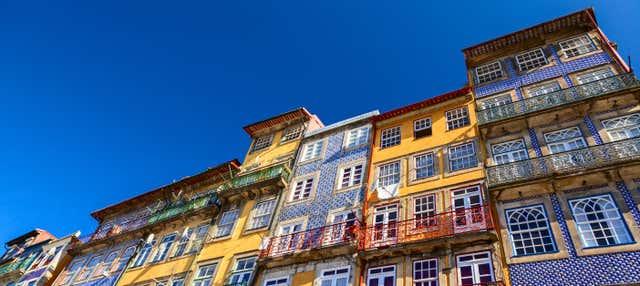 Porto Free Walking TourSee details ↗
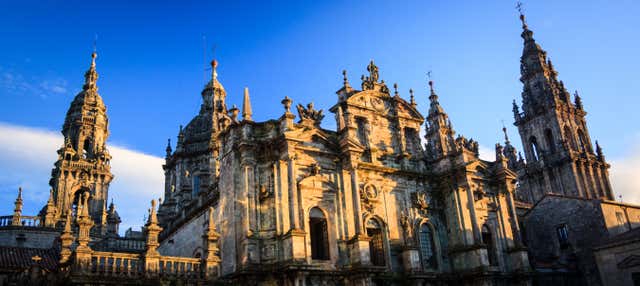 Santiago de Compostela Free Walking TourSee details ↗
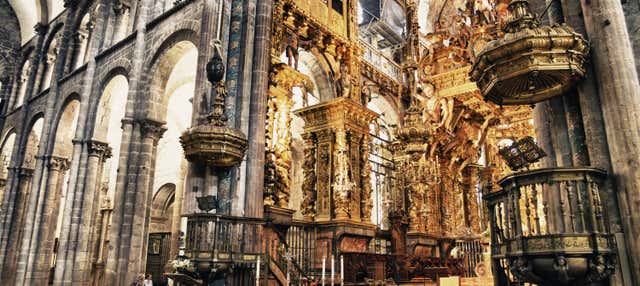 Santiago de Compostela Cathedral & Museum Guided Tourfrom €25See details ↗
Affiliate links: if you book through them we may earn a commission, at no extra cost to you. It never changes our stage, distance or luggage information. (Civitatis) How the project is funded
Before or after the walk
Walk it with luggage transfer included
Self-guided packages on Camino Português: a hotel booked at the end of each stage and your bag moved ahead every morning. Prices are the provider’s current starting price.

Affiliate links: if you book through them we may earn a commission, at no extra cost to you. It never changes our stage, distance or luggage information. (Viator) How the project is funded
Three ways to pace it
Averages worked out from the route’s real distance and ascent, so you can see what each pace actually asks of you day to day.
- Per day
- 24 km
- Ascent per day
- 350 m
Ten days at around 24 km suits walkers with strong feet and a short holiday. On this route the cost is specific: more hours on granite setts each day, which is where most injuries on the Português come from.
- Per day
- 20 km
- Ascent per day
- 290 m
Twelve days at about 20 km a day is what the accommodation, the bag transfer and the guidebooks all assume. It leaves afternoons in Ponte de Lima and Pontevedra, and enough slack to absorb one bad-weather day.
- Per day
- 17.1 km
- Ascent per day
- 250 m
Fourteen days drops the average under 18 km and turns the walk into a food and river-town trip. It suits anyone with a history of plantar fasciitis, since shorter days on paving are the only real mitigation.
These are suggested splits, not an official stage list. Real days are set by where the beds are — always check the accommodation before fixing an itinerary.
Representative stages
- Day 1 Porto → Vairão 26 km
- Day 2 Barcelos → Ponte de Lima 33 km
- Day 3 Ponte de Lima → Rubiães 18 km
- Day 4 Valença → Tui 3 km
- Day 5 Padrón → Santiago de Compostela 25 km
- Sample total 105 km
The days people underestimate
Barcelos to Ponte de Lima at 33 km is the long one, and it arrives before most walkers have hardened to the paving. The Labruja climb out of Ponte de Lima towards Rubiães is short but steep and rocky. Least expected is the final 25 km from Padrón: flat, crowded and largely on hard surfaces at the end of a fortnight.
If you have less time
If you have a week, start at Tui rather than Porto. It is just over 100 km to Santiago de Compostela, which qualifies for a Compostela, and it covers Pontevedra, Padrón and the Galician stages in five or six days. Walkers who would rather have Portugal than the certificate should take Porto to Valença instead, which is roughly the same length.
Frequently asked
How long does the Camino Português take from Porto?
Twelve days on the Central route, averaging 20 km a day over 240 km. Ten days works if you are used to 25 km stages and your feet cope with paving. Fourteen leaves room for rest days. The coastal variant from Porto is a little longer and usually walked in twelve or thirteen.
Is the Camino Português easier than the Camino Francés?
Shorter and flatter, certainly: 240 km against 790, and 3,500 m of ascent against 12,000. Easier day to day is less clear. The granite paving is punishing, and because the whole route is walked in a fortnight there is no long flat middle in which to settle into a rhythm.
Where should I break the 33 km stage to Ponte de Lima?
Balugães and Vitorino dos Piães both have beds and sit roughly two thirds of the way along, which turns one long day into a moderate one and a short one. Walkers using bag transfer sometimes prefer to keep the stage whole and start at first light instead.
Can I walk from Valença to Tui as a stage?
Not really, since it is 3 km across the international bridge. In practice it is added to the end of the day from Rubiães or the start of the day towards Porriño. The crossing matters for timekeeping rather than distance, because Spain runs an hour ahead of Portugal.
Apply it to a real route
Each trail guide gives you the stages, the season and the permits to plug into this method.