
Stages & pacing
Rota Vicentina stages and daily distances
Twelve days is the usual full walk from Porto Covo to Lagos, an average of about 19 km a day over 230 km.
On the coastal path the villages are the stages, and they sit conveniently spaced: Porto Covo, Vila Nova de Milfontes, Almograve, Zambujeira do Mar, and later Odeceixe, Aljezur, Carrapateira and Vila do Bispo, at intervals of 15 to 22 km. That is the easy part. Between them there is nothing at all, no café, no tap and no shade, for four or five hours at a stretch, and the cliff path never leaves the sun. Two litres per person is the minimum, more in September.
With 2,500 m of ascent over 230 km and a high point of 150 m, gradient is not the story here. Sand is. Long stretches of the coastal path cross soft dune, where each step gives way and your effective pace drops by a third. The 22 km from Almograve to Zambujeira do Mar is the standard illustration: modest climbs, dozens of small descents into and out of cliff-top gullies, and enough loose sand that walkers arrive two hours later than their usual speed predicts.
The route falls into three coastal blocks. The Alentejo opening, Porto Covo to Vila Nova de Milfontes and on to Almograve, is dune and cliff at their most exposed, with the river crossing at Milfontes to plan around. The middle, through Zambujeira do Mar to Odeceixe and inland to Aljezur, mixes coast with cork and eucalyptus. The Algarve finish, past Carrapateira and Vila do Bispo towards Cape St Vincent and on to Lagos, is the wildest walking and by some way the windiest.
The most common misjudgement is applying road-walking speeds to sand. A 20 km day here can take as long as a 28 km day elsewhere. The second is walking in July or August, when the cliffs are 35°C with no shade and the villages are full. The third is planning around the coastal path alone: the inland historical route runs roughly parallel and is the better option in strong wind or heavy rain, and switching between them mid-trip is normal.
Before or after the walk
Tours and visits in Lagos
A few well-rated options near Rota Vicentina, for the rest days either side of the trail. Prices are the provider’s current starting price.
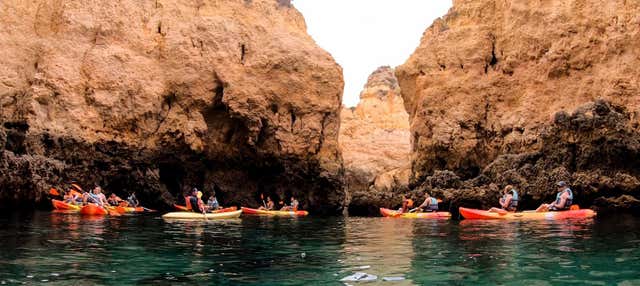 Ponta da Piedade Caves Kayak Tourfrom €35See details ↗
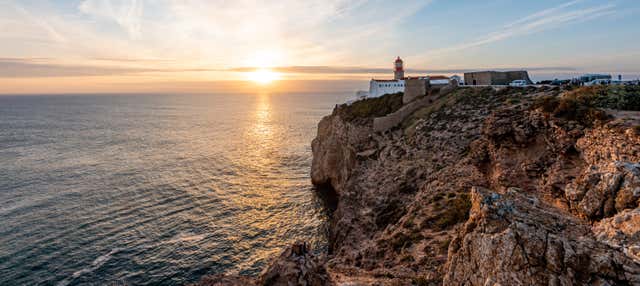 Sagres Coast Sunset Jeep Tourfrom €63See details ↗
Affiliate links: if you book through them we may earn a commission, at no extra cost to you. It never changes our stage, distance or luggage information. (Civitatis) How the project is funded
Three ways to pace it
Averages worked out from the route’s real distance and ascent, so you can see what each pace actually asks of you day to day.
- Per day
- 23 km
- Ascent per day
- 250 m
Six days across the full route would mean close to 40 km a day on dune sand, which is not a realistic plan. Treat the short figure as a section walk instead: six days covers the Alentejo coast comfortably.
- Per day
- 19.2 km
- Ascent per day
- 210 m
Twelve days at about 19 km a day is the full Porto Covo to Lagos walk, and it matches where the guesthouses are. Afternoons are free, which on this coast means a beach and a very late lunch.
- Per day
- 17.7 km
- Ascent per day
- 190 m
Thirteen days adds a rest day in Vila Nova de Milfontes or Aljezur. It suits walkers going in spring, when the wildflowers are half the reason to be there, and anyone who finds soft sand hard going.
These are suggested splits, not an official stage list. Real days are set by where the beds are — always check the accommodation before fixing an itinerary.
Representative stages
- Day 1 Porto Covo → Vila Nova de Milfontes 20 km
- Day 2 Vila Nova de Milfontes → Almograve 15 km
- Day 3 Almograve → Zambujeira do Mar 22 km
- Day 4 Odeceixe → Aljezur 18 km
- Day 5 Carrapateira → Vila do Bispo 20 km
- Sample total 95 km
The days people underestimate
Almograve to Zambujeira do Mar at 22 km is the long one, exposed and heavy with sand throughout. Porto Covo to Vila Nova de Milfontes catches people on day one for exactly the same reason. Carrapateira to Vila do Bispo is windier than anything before it, and the Algarve stages beyond have the fewest places to stop for shade or water.
If you have less time
The Alentejo half is the better short walk. Porto Covo to Odeceixe over four or five days takes in Vila Nova de Milfontes, Almograve and Zambujeira do Mar, the most dramatic cliffs on the route, and buses run to Lisbon from the larger villages. The Algarve stages are quieter but less consistently spectacular.
Frequently asked
How many days does the Rota Vicentina take?
About twelve days for the full 230 km from Porto Covo to Lagos, averaging 19 km. Most walkers do less: four or five days on the Alentejo section is the popular trip. Thirteen days with a rest day is the comfortable version, and the sand makes any faster plan optimistic.
Coastal path or inland route?
The coastal path follows the cliffs and is the reason most people come; the inland historical route runs through cork oak and villages. The coastal option is harder because of sand and wind, and it has no shade. Many walkers alternate, taking the inland line when the forecast turns.
Why does 20 km take so long here?
Soft sand. Long sections of the cliff path cross dune where each step slips backwards, and the trail also drops into and climbs out of every small valley on the coast. A day of 20 km can take six or seven hours at a pace that would cover 28 km on a firm surface.
Can I walk it in sections?
Easily. The route is a chain of coastal villages with bus links to Lisbon and the Algarve, so almost any two points make a trip. Porto Covo to Odeceixe, Odeceixe to Carrapateira and Carrapateira to Lagos are the natural thirds, each three to five days of walking.
Apply it to a real route
Each trail guide gives you the stages, the season and the permits to plug into this method.